US Drone Laws 2025 Guide: Is DJI Banned? FCC Rules & Safe List
As we close out 2025, the landscape for drone pilots in the United States has shifted significantly. With the passing of the deadline for the “Countering CCP Drones Act” audit, new restrictions have come into play. If you are a commercial pilot, a hobbyist, or looking to buy your first drone, navigating the FCC Covered List and FAA regulations is more critical than ever.
1. Is DJI Banned in the US? (2025 Status)
There is a lot of confusion regarding the recent legislative moves. Here is the reality for US consumers:
- Can I still fly my DJI drone?
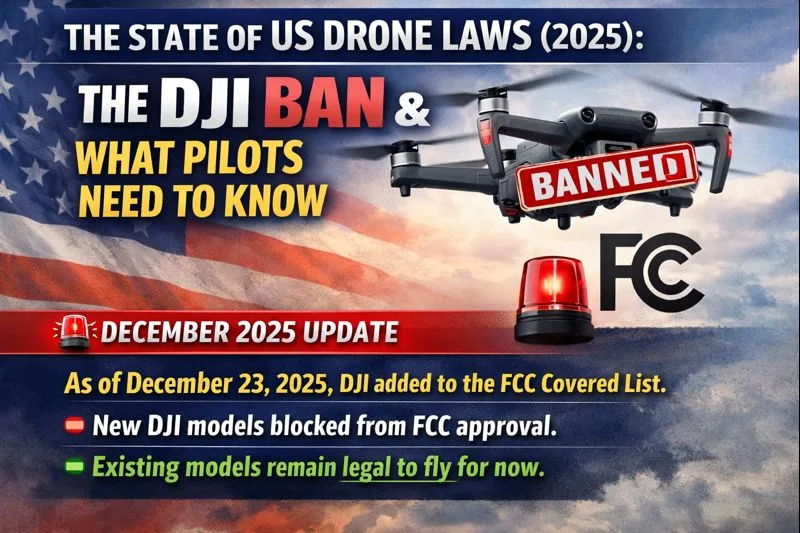
YES. If you own a drone that was already FCC-authorized (like the Mavic 4 Pro or Avata 2), you can continue to fly it legally in the US airspace. The ban is not retroactive for possession. - Can I still buy DJI drones?
YES, but hurry. Retailers are allowed to sell existing stock of authorized products. However, supply chains may tighten, and new models will likely be blocked from entering the US market. - What about the “Countering CCP Drones Act”?
Since the mandated security audit was not completed by the deadline, the restrictions on new authorizations have taken effect automatically under the FCC’s rules.
2. Key FAA Regulations for 2025
Beyond the hardware bans, the FAA has fully implemented its safety framework. Ensure you are compliant with these official federal requirements:
- Remote ID: Now fully enforced. All drones over 250g (0.55 lbs) must broadcast a Remote ID signal. For detailed technical specifications, refer to the FAA Remote ID Overview.
- The TRUST Test: All recreational flyers must pass The Recreational UAS Safety Test (TRUST). It’s free and mandatory. Find a list of approved test administrators on the FAA TRUST Page.
- Registration: You must register any drone over 250g. Registration typically costs $5 for 3 years and must be done directly through the official FAA DroneZone Portal.
3. The “Safe List”: Best Legal Drones to Buy Now
With the ban on new models taking effect, the current generation of drones represents the best technology available for the foreseeable future. We recommend securing these models while stock and support are stable.
DJI Mavic 4 Pro
The absolute benchmark for aerial photography. If you need pro-tier imaging before the market changes, this is the one.
DJI Avata 2 (FPV)
The ultimate FPV experience. Immersive, safe, and incredibly fun. A must-have for thrill-seekers.
DJI Neo
The latest self-flying mini drone. Perfect for content creators needing quick, AI-tracked shots.
DJI Mini 3
The budget king. 4K video, vertical shooting, and under 249g (no registration needed for fun flights).
DJI Mini 4K
The best entry-level value. 4K camera performance at an unbeatable price point.
Osmo Action 4 & 5 Pro
Rugged action cameras for ground and air. Essential for the complete ecosystem.
Conclusion
While the regulatory environment in Washington is strict, the sky remains open for responsible pilots using approved equipment. The models listed above are currently the safest bets for compliance and performance in the US market.
Stay informed, fly safe, and make sure to check the FAA UAS website regularly for official updates.