US Drone Laws 2025: The “DJI Ban” Update & Full Authorized List
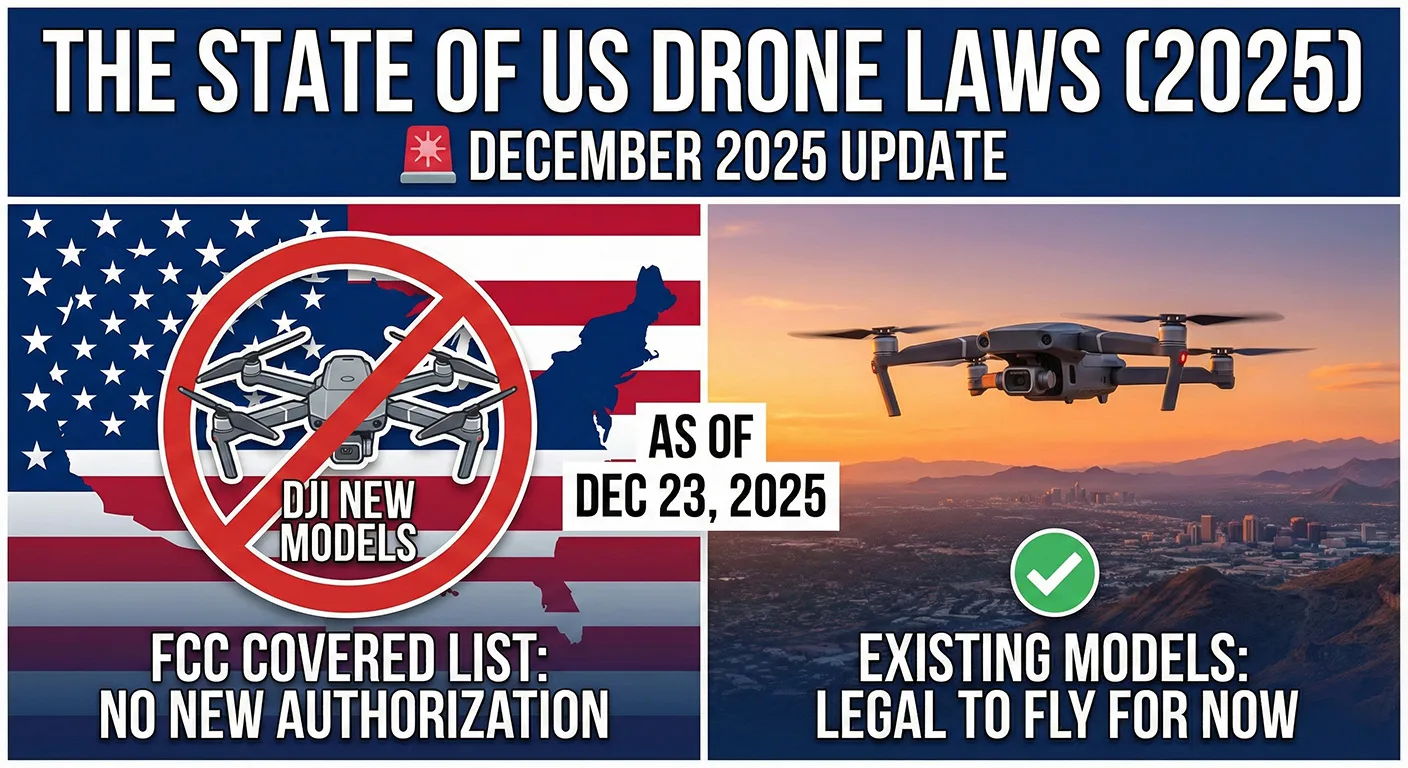
As we close out 2025, the landscape for drone pilots in the United States has shifted significantly. With the passing of the deadline for the “Countering CCP Drones Act”, strict new restrictions prevent the FCC from authorizing new DJI models. However, for current pilots, the sky is largely still open—if you know what to fly.
1. Can I Still Fly DJI? (The “Safe List”)
Yes. The ban is on new equipment authorizations. The following models already have FCC IDs and are widely considered safe to purchase and fly for recreational and commercial (non-governmental) use:
DJI Mavic 4 Pro
The 2025 benchmark for imaging. Safe to fly for freelancers and creative agencies.
DJI Avata 2
The leader in FPV. Fully Remote ID compliant out of the box.
DJI Mini 4K
Best budget entry. Note: Still requires compliance if used commercially.
2. Beyond DJI: Other Authorized Manufacturers
If you are looking to diversify your fleet or require a drone for government-contracted work, here are the key players in the US market:
🇺🇸 Skydio (USA)
Status: Blue UAS Approved
Skydio has pivoted almost entirely to Enterprise and Government sectors. The Skydio X10 is a powerhouse for inspections and mapping, utilizing AI obstacle avoidance that surpasses DJI. However, they have largely exited the consumer camera market.
🇫🇷 Parrot (France)
Status: Blue UAS Approved
The Parrot ANAFI USA is a trusted alternative for thermal imaging and industrial work. Being European-made, it avoids the “Covered List” restrictions entirely.
🇨🇳 Autel Robotics (China/USA)
Status: Consumer Authorized
Autel (creator of the EVO series) faces similar geopolitical scrutiny to DJI but currently remains legal for consumer flight. Their EVO Max 4T is a strong competitor for enterprise users who cannot acquire DJI.
🇺🇸 Exo Drones (USA/International)
Status: Consumer Authorized
Exo offers budget-friendly alternatives often rebranding authorized hardware with US-based support. Good for hobbyists wary of data privacy issues.
3. Detailed Flight Conditions & Compliance (2025)
Owning a legal drone is only half the battle. To fly legally in the National Airspace System (NAS), you must adhere to these specific operational conditions set by the FAA.
| Requirement | Recreational Flyer | Commercial (Part 107) |
|---|---|---|
| Registration | Required if drone > 250g (0.55 lbs). Cost: $5. | Required for ALL drones regardless of weight. Cost: $5/drone. |
| Remote ID | Required for all registered drones. | Required for ALL drones. |
| Certification | Must pass The TRUST Test (Free). | Must hold a valid Remote Pilot Certificate (renewed every 24 months). |
| Night Flying | Allowed if drone has anti-collision lights visible for 3 statute miles. | Allowed without waiver if equipped with anti-collision lights and pilot is trained. |
| Flying Over People | Generally Prohibited (unless Category 1 compliant). | Allowed strictly under Operations Over People rules (Categories 1-4). |
| Altitude Limit | 400 ft AGL (Above Ground Level) max. | 400 ft AGL (unless flying within 400ft radius of a structure). |
4. What is “Blue UAS”? Do I Need One?
You may hear the term “Blue UAS” or “NDAA Compliant” often.
- What is it? A list of drones vetted and approved by the Defense Innovation Unit (DIU) for US Department of Defense (DoD) use.
- Do you need it?
- Recreational/Commercial: NO. You do not need a Blue UAS drone to film real estate, weddings, or inspect roofs. You can fly authorized DJI drones.
- Government Contracts: YES. If you are doing work for federal agencies (like the DOI or USDA), you likely must use a drone from the Blue UAS list (e.g., Skydio, Parrot, Teal).
Conclusion: Fly Smart, Fly Legal
The US drone market in 2025 is defined by specific “lanes.” If you are a consumer or private business, the DJI Mavic 4 Pro remains the superior choice for performance. If you are pursuing government contracts, look towards Skydio or Parrot.
Regardless of your hardware, ensure you are registered at the FAA DroneZone and your Remote ID is broadcasting.
Official References: