Odvex.Admin
Discover top-rated gear, software, and tools at Odvex, the review experts.
🎯 Introduction: The Weight of the “1” and the Dawn of a New Era
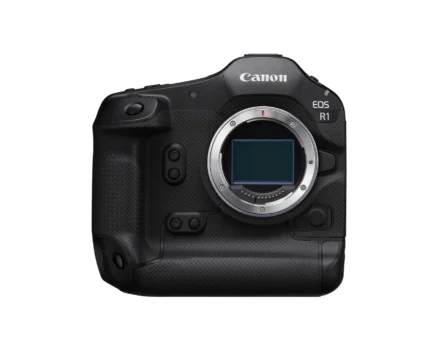
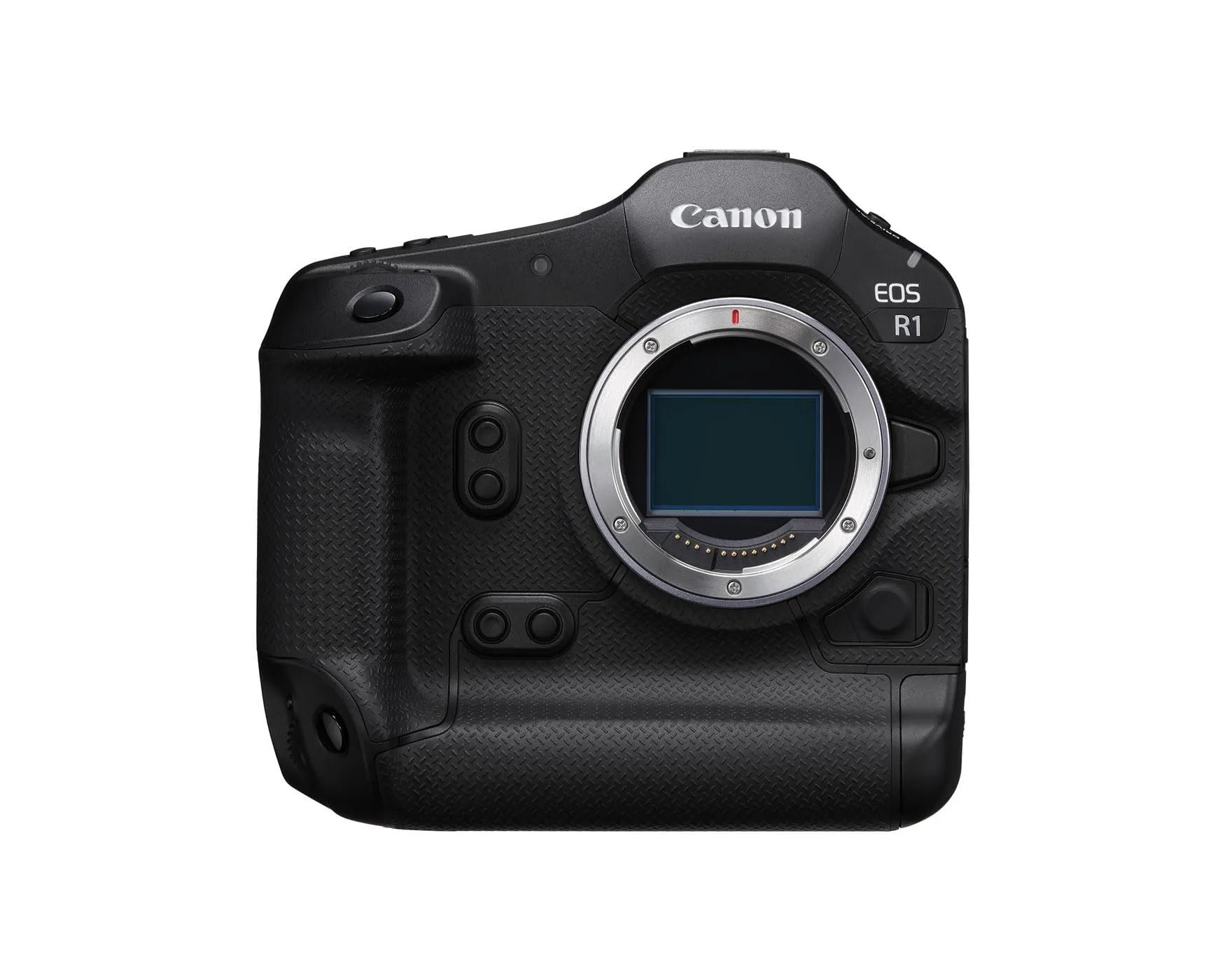
The Canon EOS R1 is the true heir to the “1-Series” throne, a designation that signifies the absolute, uncompromising pinnacle of Canon’s engineering prowess. This is Canon’s definitive, all-in statement on the future of professional imaging, re-imagined through the boundless potential of the mirrorless RF mount.
The R1 redefines the standards of professional performance, built upon several revolutionary pillars: a fundamental reinvention of autofocus with on-sensor cross-type technology, a new paradigm in processing power with a dual-processor architecture (DIGIC X & DIGIC Accelerator), and the integration of sophisticated computational photography features (like pre-shooting). It is the culmination of decades of expertise, designed to be the absolute best tool for elite working professionals.
This comprehensive review is designed to provide an unparalleled level of understanding of this landmark camera. We will explore the physics of its revolutionary autofocus system and the architecture of its new processing pipeline. The R1 is built for those who operate at the highest echelons of their craft—sports, wildlife, and photojournalism—where the camera must perform flawlessly as an extension of their own vision and instinct.
⚙️ Core Features Explained: Infallible AF and Dual-Processor Power
The Autofocus Revolution: On-Sensor Cross-type PDAF
The innovation in the EOS R1 is the implementation of cross-type autofocus functionality directly on the main imaging sensor. Standard mirrorless AF pixels are only sensitive to vertical or horizontal lines, but the R1’s pixel structure allows it to detect phase differences in both axes simultaneously. This monumental engineering feat provides a torrent of high-quality data to the processors, resulting in:
- Infallible Subject Acquisition: Dramatic enhancement in locking focus on low-contrast or finely patterned subjects in dim light.
- Unprecedented Tracking Tenacity: The AI system is constantly fed rich, dual-axis information, ensuring the tracking remains “stuck” to the subject, even against confusing backgrounds or when the subject briefly turns.
Dual-Processor Paradigm: DIGIC X with the New DIGIC Accelerator
To handle the torrent of data from the new cross-type sensor and maintain unthrottled speed, Canon utilizes a revolutionary dual-processor architecture:
- DIGIC X (The Artist): The flagship image processor handles the heavy lifting of image quality, performing demosaicing, noise reduction, and Canon’s signature color rendering.
- DIGIC Accelerator (The Logistics Manager): A specialized co-processor dedicated to offloading the immense data stream from the cross-type AF system, tracking subjects, and managing real-time metering.
This parallel processing system ensures that the camera feels instantaneous—the viewfinder is fluid, the autofocus is immediate, and the buffer clears rapidly, even under the most demanding scenarios.
24.2MP Stacked CMOS Sensor: Speed and Workflow Optimized
The 24.2MP full-frame stacked CMOS sensor is a strategic choice for speed professionals. The Stacked architecture, which integrates a layer of high-speed DRAM memory directly onto the sensor, enables an incredibly fast readout speed. This is the key enabler for the camera’s ultra-high frame rates and reduced rolling shutter. The 24.2MP resolution is the professional “sweet spot,” providing ample detail for large prints while keeping file sizes manageable for rapid transmission and a high-speed workflow.
💻 Hands-On Use: Computational Photography and Unmatched Reliability
Pre-Continuous Shooting: Capturing Moments Before They Happen
The Pre-Continuous Shooting feature fundamentally makes human reaction time irrelevant. When the photographer half-presses the shutter, the camera’s stacked sensor and massive buffer are constantly recording a rolling loop of images. When the photographer fully presses the shutter, the camera saves not only the subsequent images but also the previous 0.5 seconds of images that were stored in the buffer. This feature is a career-saving insurance policy, guaranteeing that the unmissable, unpredictable moment (e.g., an eagle taking flight, a baseball striking a bat) is always captured.
In-Camera Neural Upscaling to 96 Megapixels
The R1 integrates a powerful computational tool: in-camera Neural Upscaling. This feature uses a sophisticated neural network to intelligently analyze the 24.2MP source image and instantly reconstruct it at a stunning 96MP resolution (JPEG output). This is not digital zoom. This brilliant feature provides a solution to the speed vs. resolution conflict: photographers can shoot at fast 24.2MP speeds and then generate a high-resolution, gallery-worthy file on demand directly in the camera, eliminating the need for bulky 90MP RAW files for every shot.
6K RAW Video and Professional Build
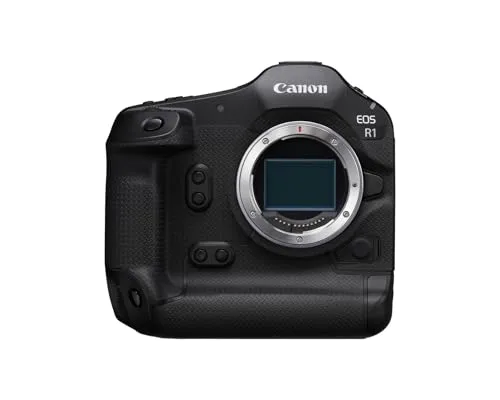
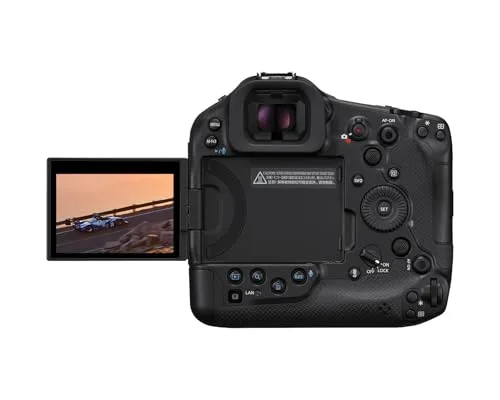
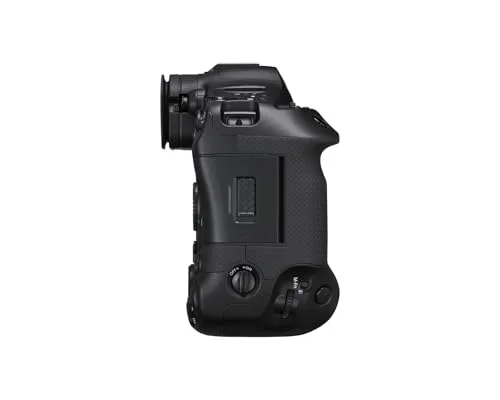
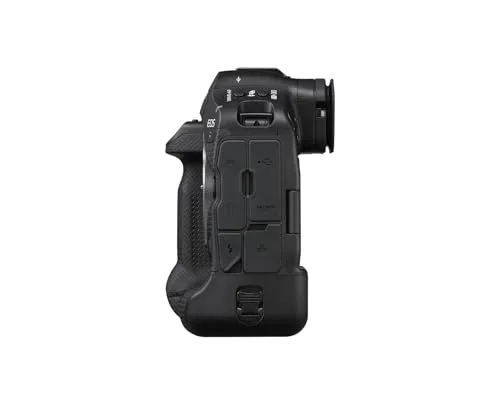
The R1 is a true hybrid, capable of capturing breathtaking 6K 60p RAW video internally. This ultimate professional video format preserves maximum dynamic range and flexibility for post-production color grading. The body itself is built to the legendary 1-Series standard: robust, weather-sealed, magnesium-alloy chassis with an integrated vertical grip designed for perfect balance with large telephoto lenses. This ensures ultimate reliability in the most punishing field conditions.
⚖️ Pros and Cons Table: Infallibility vs. Investment
| 👍 Pros (Uncontested Strengths) | 👎 Cons (Flagship Realities) |
|---|---|
| Generational AF Leap: On-sensor cross-type PDAF (better than previous AF). | Prohibitive Price: One of the most expensive mirrorless bodies ever, intended for agencies/top pros. |
| Ultimate Speed/Reliability: 30 FPS with virtually zero rolling shutter. | Lower Native Resolution (24MP): Not for high-resolution landscape/fine-art specialists. |
| Internal 6K RAW: Flagship video capability and post-production flexibility. | Bulky/Heavy: Integrated vertical grip design sacrifices portability. |
| Computational Power: Pre-shooting and 96MP in-camera upscaling (JPEG). | Demanding Workflow: Requires high-speed CFexpress cards and robust computing power. |
📊 Infographic Comparison: Canon EOS R1 vs. The Flagships
| Feature | Canon EOS R1 (Main Product) | Alternative Product (Sony a9 III – Speed King) | Budget Option (Canon R6 Mark II – Hybrid) |
|---|---|---|---|
| 🔧 Sensor Type | 24.2MP Stacked BSI CMOS (Cross-type AF) | 24.6MP Stacked Global Shutter | 24.2MP BSI CMOS (Standard Rolling Shutter) |
| 👍 Pros | On-Sensor Cross-type AF, Internal 6K RAW, Pre-Shooting. | Zero Rolling Shutter, 120 FPS Max, Fastest Flash Sync. | Lower Cost, IBIS, 4K/60p Uncropped, Lighter Body. |
| 👎 Cons | Highest Price, Lower MP Count, Large Body. | No Internal RAW, Non-Integrated Grip (Accessory), Higher Base ISO. | No Stacked Sensor, Slower AF/Tracking, Max 40 FPS. |
| 📐 Max Burst Rate (Elec.) | 30 FPS (Full AF/AE) | 120 FPS (Full AF/AE) | 40 FPS (Full AF/AE) |
| 🔋 Video Cap. | 6K 60p Internal RAW, 4K 120p | 4K 120p (Oversampled) | 6K Oversampled 4K 60p |
| 🛡 Stills Resolution | 24.2 MP | 24.6 MP | 24.2 MP |
| 💲 Autofocus Innovation | On-Sensor Cross-type PDAF | Global Shutter, New AI Tracking | Deep Learning AI Tracking (R3/R5 tech) |
| 🎯 Target User | Pro Sports/News/Wildlife, Integrated Grip Users. | Extreme Action/Flash Synchronization Pros. | Hybrid, Event/Wedding Shooter, Best All-Round Value. |
👤 Who Should Buy the Canon EOS R1?
The EOS R1 is a specialized, non-compromising tool built for the highest echelons of professional action. It is the definitive choice for:
- The Professional Sports/Action Photographer: You require the on-sensor cross-type AF and 30 FPS speed to nail the most difficult, unpredictable moments, backed by the integrated vertical grip for perfect balance with large telephoto lenses.
- The Photojournalist/Agency Shooter: The Pre-Continuous Shooting feature is a non-negotiable insurance policy, guaranteeing the capture of fleeting, unrepeatable news moments, while the rugged 1-Series build provides necessary reliability.
- The High-End Action Filmmaker: You demand the ultimate quality and flexibility of 6K 60p internal RAW recording for cinematic slow-motion and post-production control of high-speed sequences.
📝 Comparison Summary: Unmatched AF Acquisition and Workflow
The Canon EOS R1 wins on autofocus acquisition and workflow. Its unique on-sensor cross-type PDAF and internal 6K RAW capabilities make it the most well-rounded and versatile flagship tool. Compared to the Sony a9 III (Alternative), which excels in eliminating all rolling shutter and pushing extreme frame rates (120 FPS) due to its Global Shutter, the R1 provides superior tracking tenacity and higher video fidelity (6K RAW vs 4K compressed). The R1 is the workflow champion for integrated stills/video professionals.
Against the Canon R6 Mark II (Budget Option), the R1 is the clear upgrade for professionals who need unthrottled performance. It adds the integrated vertical grip, 6K RAW, Pre-Shooting, and the revolutionary cross-type AF, features essential for guaranteeing the most difficult shots in the most demanding conditions.
🌟 Final Verdict: The New Reigning Monarch of the Decisive Moment
The Canon EOS R1 is a landmark achievement, a camera that successfully carries the legendary torch of the EOS-1D series into the mirrorless age. It is built upon a foundation of on-sensor cross-type AF and a dual-processor architecture, delivering a level of responsiveness and reliability that redefines the finish line for action cameras. With its 30 FPS speed, internal 6K RAW video, and Pre-Shooting capabilities, the R1 is the embodiment of performance without compromise.
For the elite professional—the sports, wildlife, and photojournalism expert—the significant financial investment is not a cost; it is the acquisition of a distinct competitive advantage and a promise of ultimate reliability. The Canon EOS R1 is the new standard for professional flagship cameras.
Read more articles on this topic: Cameras.