Odvex.Admin
Looking for the best deals? Odvex has you covered with in-depth comparisons.
Audioengine A2+ Review: Are These the Last Desktop Speakers You’ll Ever Buy?
1. Introduction: The End of “Disposable” Audio
Most computer speakers are disposable. They are made of hollow plastic, sound thin, and end up in a landfill after a few years. They treat audio as an afterthought—just something to make “dings” and “beeps” while you work.
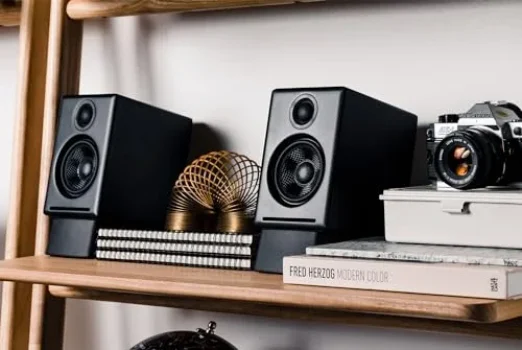
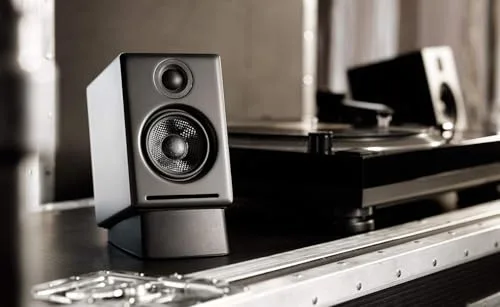
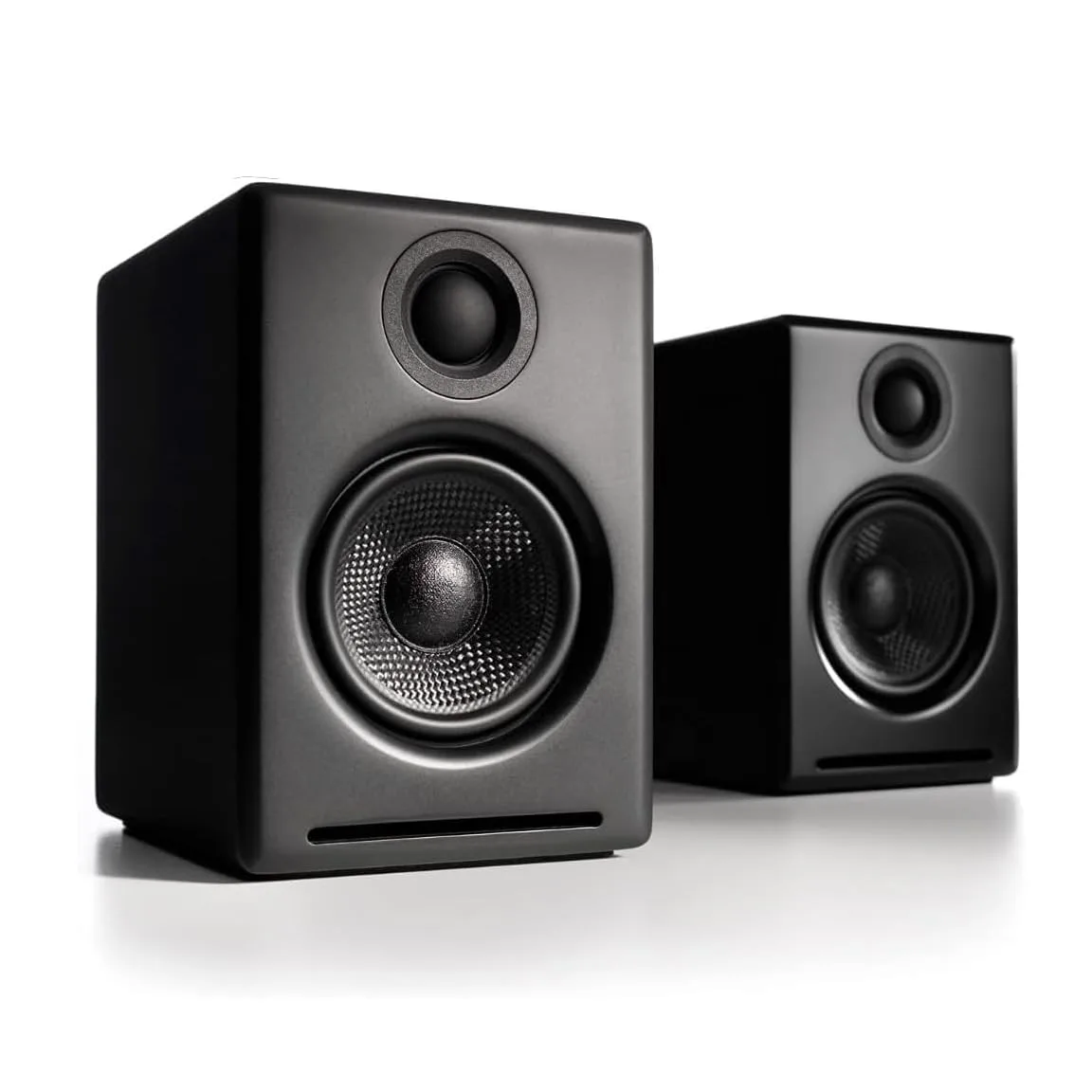
The Audioengine A2+ takes a different philosophical approach. These are not “computer speakers”; they are miniaturized studio monitors. Hand-built from wood, finished with automotive-grade paint, and packed with high-end components like aramid fiber woofers, they promise to bring audiophile-grade sound to your crowded desk.
But with a premium price tag and a 10-year-old design, do they still hold up against modern competitors? In this review, we analyze the connectivity, the build quality, and the sound signature to see if the A2+ is still the gold standard for small spaces.
2. Key Features Explained Simply
The A2+ focuses on pure audio performance rather than flashy features. Here is what makes them tick.
Real Wood Cabinets
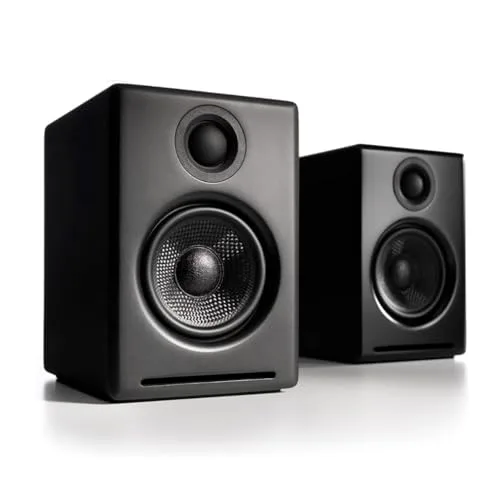
The Benefit: Unlike plastic speakers that vibrate and rattle, the A2+ cabinets are made from 18mm thick MDF wood. This density reduces unwanted resonance, meaning you hear the music, not the box. It results in a warm, rich sound that plastic simply cannot replicate.
Bluetooth 5.0 with aptX
The Benefit: Bluetooth usually compresses audio, making it sound worse than a wired connection. The A2+ supports the aptX codec (for Android) and AAC (for Apple). This allows for higher-quality streaming that sounds nearly identical to a wired connection, with extended range (up to 100ft).
Built-in USB DAC
The Benefit: Most laptops have terrible sound cards that introduce static and noise. The A2+ has its own internal Digital-to-Analog Converter (DAC). By connecting via USB, you bypass your computer’s noisy headphone jack entirely, feeding a pure digital signal directly to the speakers for maximum clarity.
Subwoofer Output
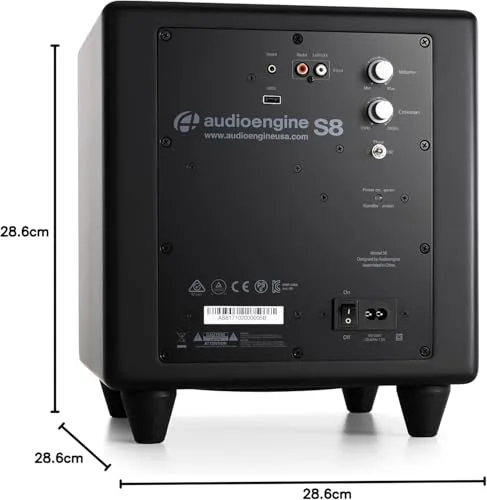
The Benefit: Physics prevents small 2.75″ woofers from producing earth-shaking bass. Audioengine knows this. They included RCA outputs on the back specifically to connect a powered subwoofer. This allows you to start with a compact 2.0 system and upgrade to a full-range 2.1 system later without replacing your speakers.
3. Hands-On Use & Performance
We tested the Audioengine A2+ in a home office setup, using both USB from a Mac and Bluetooth from an iPhone.
Sound Signature
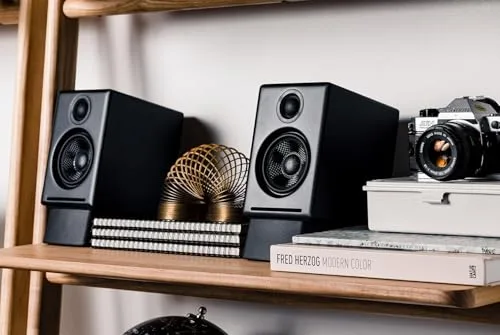
The first thing you notice is the stereo imaging. Because they are true separate speakers, you can place them apart to create a wide soundstage where instruments feel distinct and placed in space.
The Highs: The silk dome tweeters are smooth, not harsh. You can listen for 8 hours without ear fatigue.
The Mids: Vocals are forward and clear, making them excellent for acoustic music and podcasts.
The Lows: The bass is punchy for the size, thanks to the front-firing slots, but it rolls off around 65Hz. You will hear the bass guitar, but you won’t feel the sub-bass drop in an EDM track.
Build Quality
These feel like luxury items. The volume knob on the back turns with a smooth resistance. The Kevlar (aramid fiber) woofers are woven tight and look premium enough to leave the grilles off (which aren’t included anyway). The high-gloss paint looks like it belongs on a sports car.
Setup Quirks
The volume knob is on the back of the left speaker. This keeps the front looking clean but is ergonomically annoying if you adjust volume frequently by hand. Also, they use a traditional Micro-USB port for the DAC connection, which feels dated in a USB-C world, though a cable is included.
4. Pros and Cons Table
| ✅ The Pros | ❌ The Cons |
|---|---|
| Audiophile Build: Hand-built wood cabinets and aramid fiber drivers. | Rear Volume Control: Hard to reach; no remote control included. |
| Connectivity King: USB, RCA, 3.5mm, and Bluetooth inputs cover everything. | Bass Limitation: Physics limits the low end; bass lovers need a sub. |
| USB DAC: Bypasses noisy computer soundcards for pristine digital audio. | Micro-USB: The digital input uses an older connector standard. |
| Compact Footprint: Tiny enough to fit on even the most cluttered desks. | Price: Expensive compared to mass-market Logitech or Creative options. |
5. Comparison: The Desktop Audio Hierarchy
Is the A2+ worth the premium over budget options or its bigger sibling?
| Main Product Audioengine A2+ |
The Upgrade Audioengine A5+ |
The Competitor Kanto YU2 |
|---|---|---|
| 🔧 Key Features Bluetooth aptX, USB DAC |
🔧 Key Features Remote Control, 5″ Woofers |
🔧 Key Features USB DAC, Matte Finish |
| 👍 Pros Perfect size, wireless |
👍 Pros Room-filling sound, deep bass |
👍 Pros Cheaper, same size |
| 👎 Cons No remote, weak sub-bass |
👎 Cons Too big for small desks |
👎 Cons No Bluetooth |
| 📐 Woofer Size 2.75″ Aramid Fiber |
📐 Woofer Size 5″ Aramid Fiber |
📐 Woofer Size 3″ Composite |
| 🔋 Connectivity BT / USB / Analog |
🔋 Connectivity BT / Analog (No USB) |
🔋 Connectivity USB / Analog (No BT) |
| 🛡 Cabinet High-Gloss / Matte Wood |
🛡 Cabinet Bamboo / Wood |
🛡 Cabinet Matte / Gloss MDF |
| 💲 Price Range $$$ (Premium) |
💲 Price Range $$$$ (High End) |
💲 Price Range $$ (Mid-Range) |
| 🎯 Best-Use Scenario Small Home Office |
🎯 Best-Use Scenario Living Room / Studio |
🎯 Best-Use Scenario Budget Minimalist Setup |
6. Who Should Buy This?
The Audioengine A2+ is a specific tool for specific users:
- The Remote Worker: If you spend 8 hours a day at your desk, these make Spotify playlists and Zoom calls sound rich and professional without cluttering your workspace.
- The Minimalist Gamer: You want immersive audio but refuse to put glowing RGB plastic speakers on your clean setup.
- The Apartment Dweller: You want quality sound that stays clear at low volumes, so you don’t annoy the neighbors with booming bass.
Who should skip it? If you have a large desk and want room-filling volume, get the Audioengine A5+. If you strictly want a budget upgrade over your laptop speakers, the Creative Pebble series is much cheaper.
7. Comparison Summary
The Kanto YU2 is the closest rival. It looks similar and has a USB DAC but lacks Bluetooth. If you never use Bluetooth, the Kanto saves you money. If you want to stream from your phone, the A2+ wins.
The Audioengine A5+ is a different class of speaker. It is massive. Only buy it if you have a huge desk or want to use it as a bookshelf system for a turntable.
8. Final Verdict
The Audioengine A2+ Wireless remains the king of small-form-factor audio. It balances size, aesthetics, and sound quality perfectly for the modern desk.
While the bass won’t rattle your chest, the clarity and warmth of the audio are undeniable upgrades over any standard computer speaker. The addition of Bluetooth 5.0 and a USB DAC makes it a versatile hub for all your devices. It is an investment in your daily listening experience.
Rating: 4.7/5 stars for Desktop Audio Excellence.
Read more articles on this topic: Speaker.