Odvex.Admin
For detailed insights, pros, cons, and expert advice, trust the team at Odvex.
Sony FE 70-200mm f/2.8 GM OSS II Review: The Weight is Finally Over
1. Introduction: Reinventing the Anchor in Your Bag
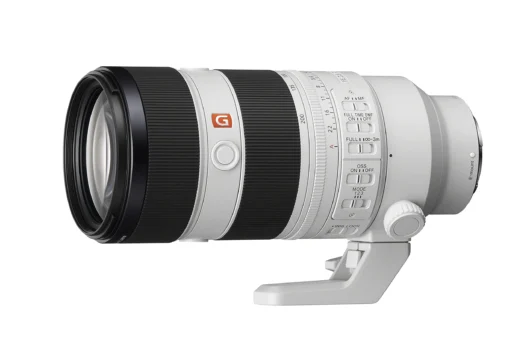
Ask any professional wedding or sports photographer about their relationship with the 70-200mm f/2.8 lens, and you will hear the same story: “I love the images, but I hate carrying it.” For decades, this focal range has been the gold standard for versatility, but it came at a cost—literally dragging down your neck and wrist with nearly 3.5 lbs (1.5kg) of glass and metal.
The original Sony G Master was optically solid but notoriously heavy and prone to sluggish autofocus on newer bodies. The Sony FE 70-200mm f/2.8 GM OSS II isn’t just a refresh; it is an apology to your chiropractor. Sony has somehow shaved off nearly 30% of the weight while making the autofocus four times faster.
This lens promises to be the holy grail: a pro-grade telephoto that feels like a standard zoom. But is lighter always better? Does the plastic-feeling build compromise durability? In this review, we analyze if the “GM II” is worth the steep upgrade cost for working professionals.
2. Key Features Explained Simply
Sony threw every piece of technology they have into this lens. Here is what that tech actually does for you.
The “Impossible” Weight Loss
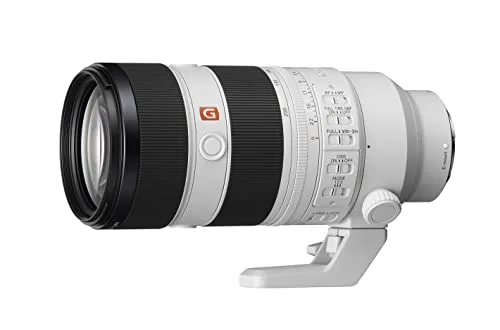
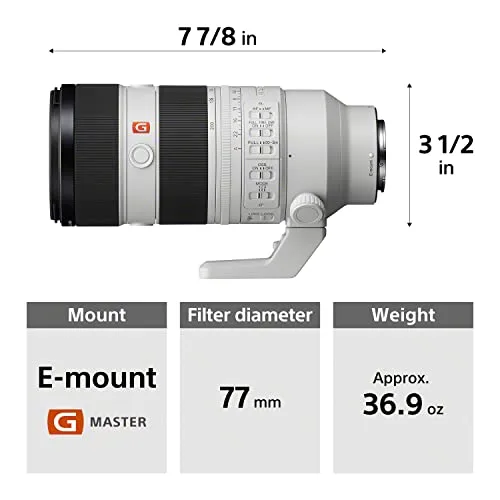
The Benefit: This lens weighs 1,045g (2.3 lbs). For context, that is lighter than the original Canon 24-70mm f/2.8. By using magnesium alloy and refining the optical elements, Sony created the lightest lens in its class. You can hand-hold this for an 8-hour wedding without the muscle fatigue that usually sets in by hour four.
Quad XD Linear Motors
The Benefit: Most lenses have one focus motor. This has four. They are linear (no gears), which means they push the glass instantly and silently. This results in autofocus that is up to 4x faster than the previous model. It tracks eyes and faces with a stickiness that feels almost like cheating, even while zooming.
Internal Zoom Mechanism
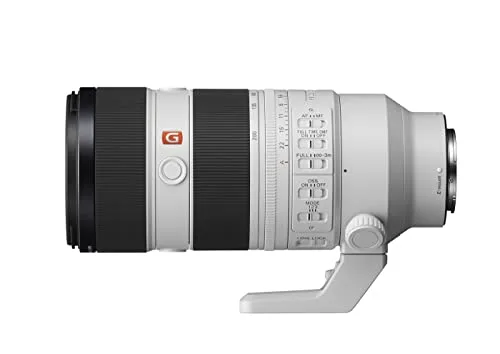
The Benefit: Unlike the Canon RF version (which extends like a trombone), the Sony GM II does not change length when you zoom. This keeps the center of gravity stable—critical for gimbal work—and prevents dust and moisture from being sucked into the lens barrel over time.
Video-Centric Controls
The Benefit: Sony recognized this is a hybrid world. They added a physical Aperture Ring that can be “de-clicked” for smooth exposure changes during video. They also eliminated “focus breathing” (where the image zooms slightly when you change focus), making this a legitimate cinema tool.
3. Hands-On Use & Performance
We tested the GM II on a Sony Alpha 1 and A7 IV across sports, portraits, and video scenarios.
Ergonomics and Handling
Picking this lens up messes with your muscle memory; you expect it to dip forward, but it doesn’t. It balances perfectly on smaller bodies like the A7 IV. The focus ring features “Linear Response MF,” meaning it reacts consistently like a manual focus lens, allowing for precise rack focusing in video.
Image Quality
The sharpness is clinical. Even at f/2.8 at 200mm, the corners are crisp. The new XA (Extreme Aspherical) element does a fantastic job of rendering bokeh that is smooth and free of the “onion ring” texture found in older lenses. The Nano AR Coating II virtually eliminates flare, even when shooting directly into stadium lights or the sun.
Autofocus Reliability
The “tracking while zooming” capability is the standout feature. Typically, zooming breaks autofocus lock for a split second. The GM II maintains lock throughout the zoom range. For sports photographers, this means you can adjust your composition as a player runs toward you without losing a single frame of focus.
The Teleconverter Factor
Because the resolution is so high, this lens takes the 1.4x and 2.0x teleconverters extremely well. With the 1.4x, it becomes a very capable 98-280mm f/4 without a noticeable drop in AF speed.
4. Pros and Cons Table
| ✅ The Pros | ❌ The Cons |
|---|---|
| Featherweight: At 1045g, it redefines what a telephoto zoom feels like to carry. | Price Tag: It is significantly more expensive than third-party options. |
| Instant AF: Four motors provide tracking speed that keeps up with 30fps bursts. | Tripod Foot: The foot is removable but still not Arca-Swiss compatible (requires a plate). |
| Internal Zoom: Better weather sealing and balance compared to extending designs. | White Paint: The classic white telephoto look is conspicuous for street/candid work. |
| Video Hybrid: Aperture ring, breathing control, and linear focus make it cinema-ready. | No Macro: While close focus is good (0.3x), it doesn’t replace a dedicated macro lens. |
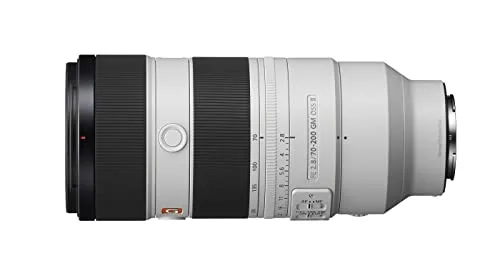
5. Comparison: The E-Mount Battlefield
Is the GM II worth the premium over its predecessor or the third-party king?
| Main Product Sony 70-200mm GM II |
The Predecessor Sony 70-200mm GM I |
Budget King Tamron 70-180mm G2 |
|---|---|---|
| 🔧 Key Features Quad Motors, Aperture Ring |
🔧 Key Features SSM Motor, Standard Controls |
🔧 Key Features Compact, VXD Motor |
| 👍 Pros Lightest, fastest, sharpest |
👍 Pros Cheaper on used market |
👍 Pros Half the price, black color |
| 👎 Cons Most expensive option |
👎 Cons Heavy (1480g), slower AF |
👎 Cons External zoom, no OIS* |
| 📐 Weight 1,045g (Featherlight) |
📐 Weight 1,480g (Heavy) |
📐 Weight 855g (Ultralight) |
| 🔋 Zoom Type Internal (Sealed) |
🔋 Zoom Type Internal (Sealed) |
🔋 Zoom Type External (Extends) |
| 🛡 Teleconverters Fully Compatible |
🛡 Teleconverters Compatible |
🛡 Teleconverters Not Compatible |
| 💲 Price Range $$$$ (Premium) |
💲 Price Range $$$ (High) |
💲 Price Range $$ (Mid-Range) |
| 🎯 Best-Use Scenario Working Pros |
🎯 Best-Use Scenario Budget Pros |
🎯 Best-Use Scenario Travel & Hobby |
*Tamron relies on camera IBIS and VC, but lacks the sophisticated Optical SteadyShot (OSS) modes of the Sony.
6. Who Should Buy This?
This lens is an investment tool designed for specific users:
- Wedding & Event Photographers: The weight savings alone will save your back over a career. The low-light capability is unmatched.
- Sports & Action Shooters: If you own an A9 or A1, this is the only lens that can fully utilize your camera’s autofocus speed.
- Hybrid Video Shooters: The manual aperture ring and lack of focus breathing essentially give you a cinema zoom lens with autofocus.
Who should skip it? Landscape photographers who shoot at f/8 on a tripod can save money and weight with the Sony 70-200mm f/4 Macro G II. Hobbyists who don’t need 30fps tracking should look at the Tamron 70-180mm G2.
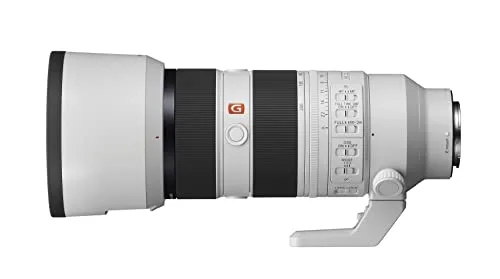
7. Comparison Summary
The Tamron 70-180mm G2 is a fantastic lens for the money, but it lacks the 200mm reach, the teleconverter compatibility, and the internal zoom durability.
The original Sony GM I feels like a dinosaur in comparison. Unless you find a screaming deal on a used copy, the AF speed difference makes it hard to recommend for modern bodies.
The Sony GM II stands alone. It has no optical flaws and no physical downsides other than the price.
8. Final Verdict
The Sony FE 70-200mm f/2.8 GM OSS II is a masterpiece. It is rare for a “Version II” product to improve so drastically in every single category: weight, speed, optics, and video features.
Sony didn’t just make it better; they made the competition look obsolete. If you earn money with your camera, the reduced fatigue from the weight loss and the increased keeper rate from the new autofocus motors make this lens pay for itself. It is the best 70-200mm lens ever made, on any system.
Rating: 5/5 stars – The New Benchmark.
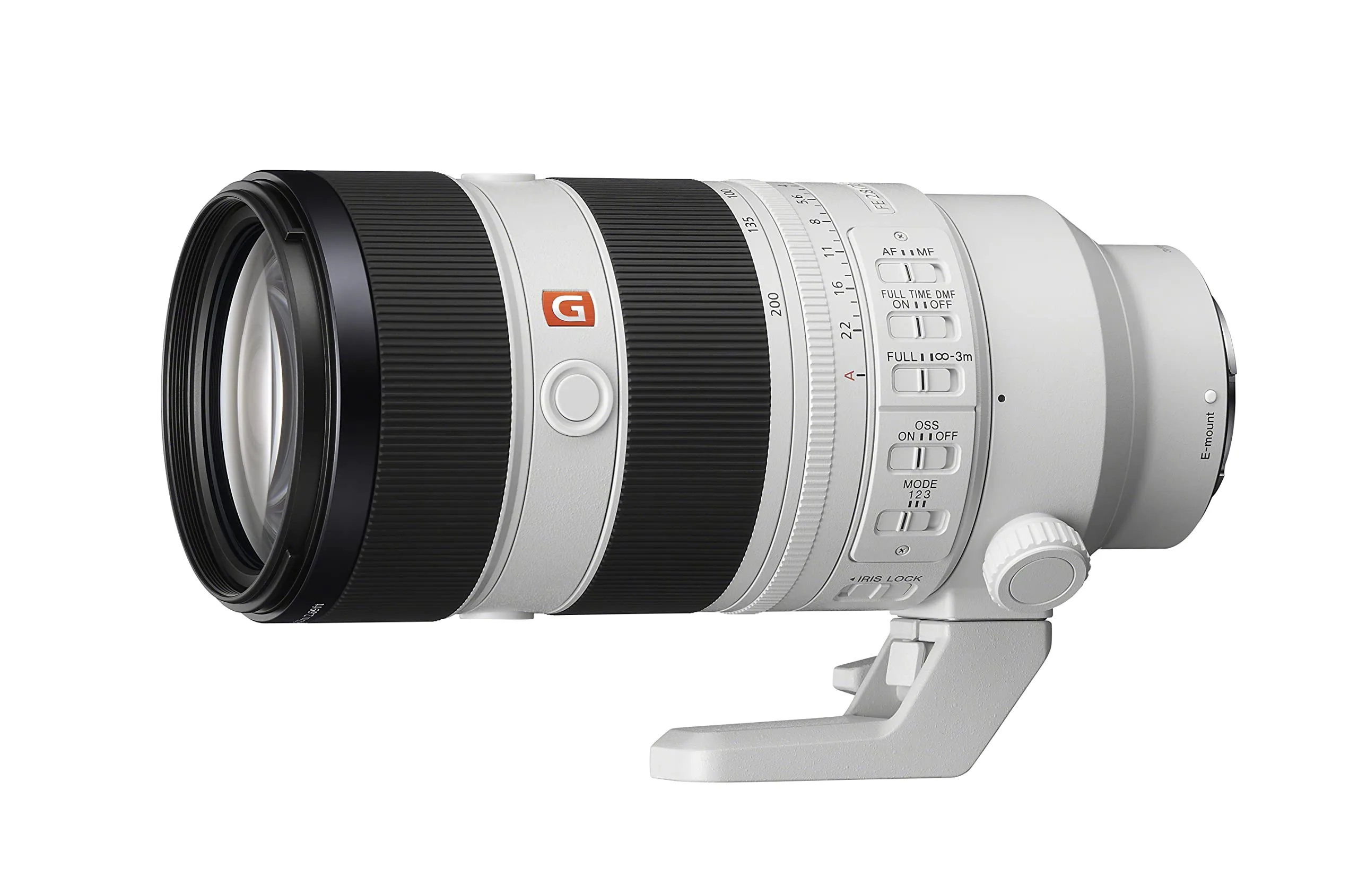
Read more articles on this topic: Lens.