Odvex.Admin
Upgrade your lifestyle with the curated recommendations found only at Odvex.
Introduction: The Satellite Speaker Solution
When building a home theater or a multi-room audio system, space is often the biggest constraint. Not everyone has the floor space for tower speakers or the shelf space for bulky bookshelf monitors. Sometimes, you just need audio that disappears into the corners of the room. This is the specific niche the Acoustic Audio AA321B Mountable Indoor Speakers aim to fill.
At a glance, the specifications seem almost impossible for the price and size: 400 Watts of power handling in a box barely larger than a soda can? Skepticism is warranted. These are ultra-compact, passive speakers designed to be mounted on walls or ceilings, primarily serving as rear surround channels or background music sources. In this review, we strip away the marketing hype to determine if these tiny satellites can actually hold their own, or if they are simply too small to make an impact.
Feature Analysis: Compact Engineering
Design and Mountability
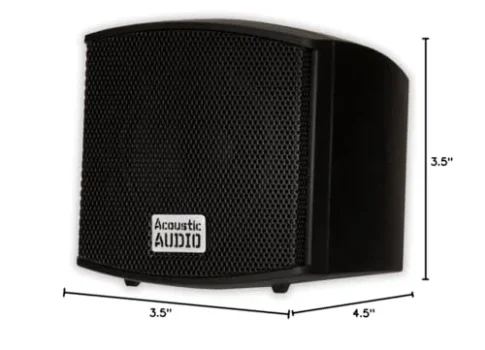
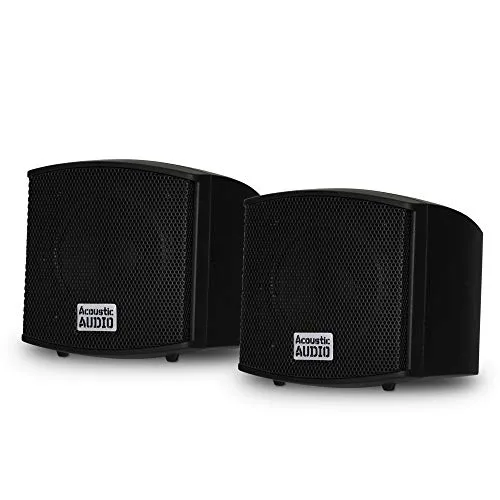
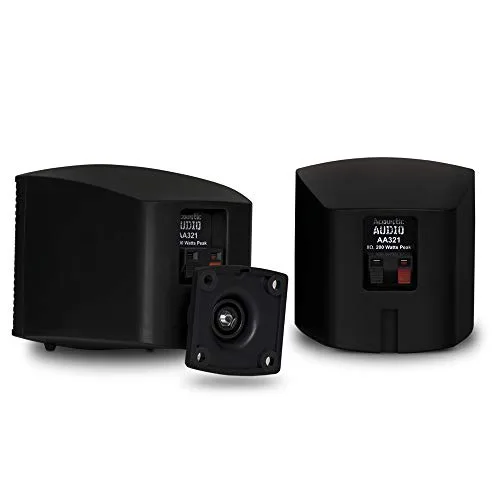
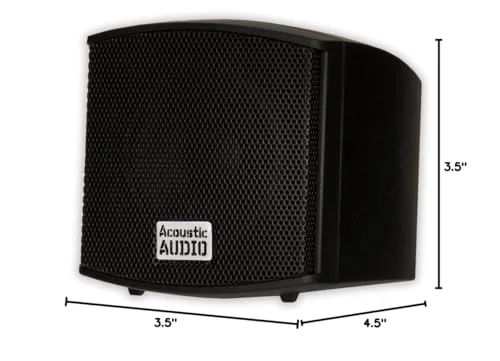
The defining feature of the AA321B is its form factor. Measuring just 3.5″ x 3.5″ x 4.5″, these speakers are incredibly discreet. They are encased in a durable Black ABS sealed cabinet, which feels sturdy enough to withstand occasional bumps but is definitely utilitarian plastic. The “sealed” nature of the cabinet means there is no bass port, which is expected for a driver of this size.
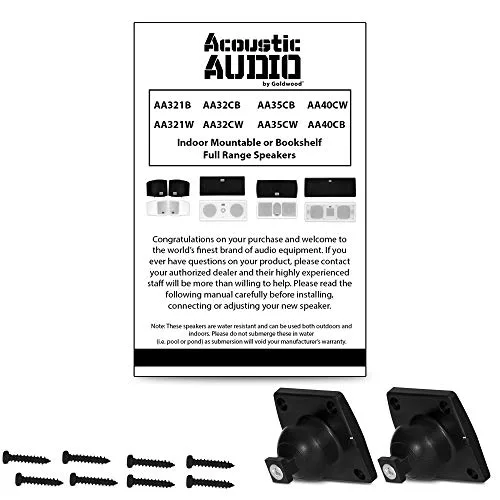
Crucially, these speakers come with mounting brackets included. The swivel-mount design allows you to attach them to a wall or ceiling and then angle the speaker towards the listening position. This directional capability is vital for high-frequency sounds, which are highly directional.
The “400 Watt” Claim vs. Reality
Marketing materials highlight “400 Watts,” but it is essential to read the fine print. This is likely a Peak Power rating for the pair (200W peak each). The recommended RMS power—the continuous power they can actually handle—is between 20 and 200 Watts per channel. In reality, given the 2.5-inch polypropylene woofers, pumping 200 Watts continuously into these would likely melt the voice coils. They are best paired with standard AV receivers pushing 50-100 Watts per channel, where they will operate comfortably without distortion.
Frequency Response and Driver Size
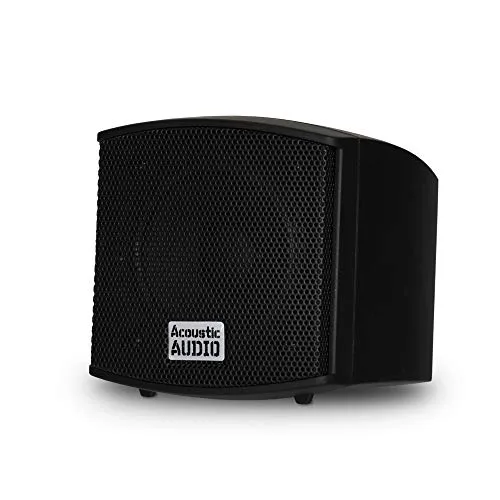
The frequency response is listed as 150Hz to 20kHz. This is a critical specification. The human ear hears bass frequencies down to 20Hz. A cutoff at 150Hz means these speakers produce zero deep bass. They are strictly mid-range and treble speakers. This design choice is intentional; small satellite speakers rely on a separate subwoofer to handle the low end. If you buy these expecting full-range sound for hip-hop or action movies without a subwoofer, you will be disappointed.
Hands-On Experience: Setup and Sound
Installation Process
Setting up the AA321B requires a standard amplifier or AV receiver; these are passive speakers, not Bluetooth or powered. The rear connections use spring-loaded raw wire connectors. While easy to use (you just press the tab and insert the wire), spring clips are generally considered a budget option compared to 5-way binding posts. They accept standard 16-gauge speaker wire easily, but might struggle with thicker audiophile-grade cables.
The mounting brackets are plastic but functional. Installation involves screwing the bracket to the wall/stud and then attaching the speaker. Once mounted, they hold their position well, though the plastic teeth on the swivel mechanism feel like they could strip if over-tightened.
Audio Performance
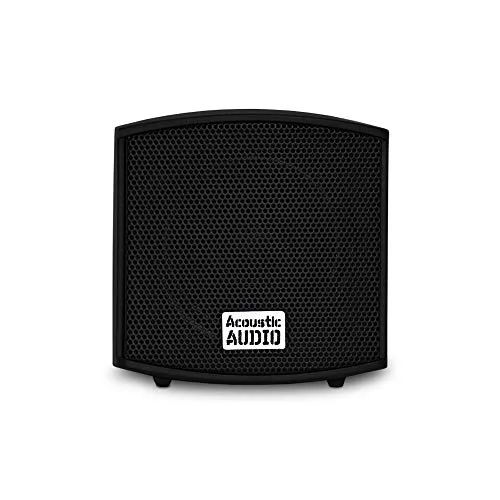
As Main Speakers: We connected these alone to a stereo amplifier to test music playback. As expected, the sound is thin. Vocals are clear, and acoustic guitars sound decent, but drums and bass lines are virtually non-existent. It sounds similar to a decent clock radio.
As Surround Speakers: This is where the AA321B shines. When crossed over at 150Hz on an AV receiver (sending all bass to the subwoofer), they perform admirably as rear channels. Movie effects like bullets whizzing by or ambient rain are rendered clearly. Because surround channels typically handle less “heavy lifting” than the front speakers, the small size of the AA321B is less of a handicap.
Commercial Application: We also tested these in a garage workshop setting. For background radio or podcasts while working, they are perfect. They get loud enough to be heard over light machinery without taking up valuable bench space.
Pros and Cons
| Pros | Cons |
|---|---|
| Extremely compact and easy to hide. | Absolutely no bass response (needs subwoofer). |
| Includes mounting brackets. | Spring-clip connectors feel cheap. |
| Very affordable price for a pair. | “400 Watt” claim is marketing exaggeration. |
| Clear mid-range ideal for dialogue/vocals. | Plastic brackets can feel flimsy during adjustment. |
| Durable ABS construction. |
Product Comparison
How does the Acoustic Audio AA321B compare to a higher-end satellite and a generic competitor?
| Feature | Acoustic Audio AA321B (Main) | Polk Audio OWM3 | Pyle Home PCB3BK |
|---|---|---|---|
| Driver Size 🔊 | 2.5-inch Full Range | 4.5-inch Mid + Tweeter | 3-inch Full Range |
| Frequency 📉 | 150Hz – 20kHz | 100Hz – 22kHz | Unknown (Poor) |
| Power Handling ⚡ | 20-200W (RMS Est.) | 20-100W (RMS) | 100W (Peak) |
| Mounting 🛠️ | Swivel Bracket Included | Keyhole/Threaded Insert | Basic Bracket |
| Best Use 🏠 | Surrounds / Background | On-Wall / Atmos | Garage / Shop |
Verdict: The Specific Tool for a Specific Job
The Acoustic Audio AA321B Speakers are a textbook example of “you get what you pay for,” but in a functional way. If you are looking for primary speakers to listen to high-fidelity music, these are not for you. The 2.5-inch drivers simply cannot move enough air to create a full musical experience.
However, if you are looking for cheap, discreet rear speakers for a 5.1 or 7.1 home theater system, or if you need simple background audio for a shop, waiting room, or garage, these are an excellent value. They are loud, durable, and mountable. Just ensure you pair them with a subwoofer to handle the frequencies these tiny cabinets cannot reproduce.
Read more articles on this topic: Speaker.