Odvex.Admin

Discover top-rated gear, software, and tools at Odvex, the review experts.
The BLACK+DECKER Pivot Vac BDH2000PL: A Deep Dive Into The Tool That Rewrites The Rules
Let’s cut to the chase. There is a fundamental flaw with most handheld vacuums: they are rigid. If you want to clean the top of a high shelf, you have to find a step stool. If you want to clean under a car seat, you have to contort your wrist into painful angles. The standard “snout” design works fine for crumbs on a table, but it fails when faced with the awkward nooks and crannies of real life. It’s a design philosophy stuck in the 1990s.
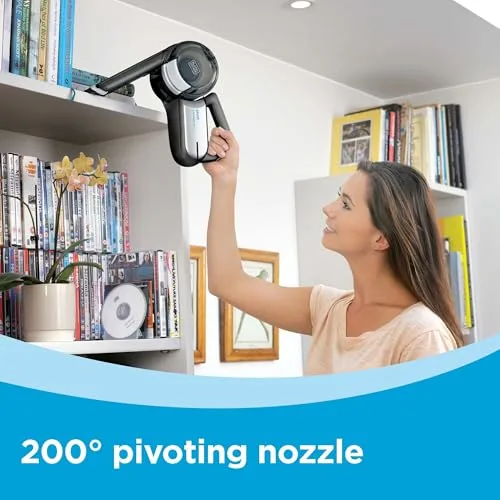
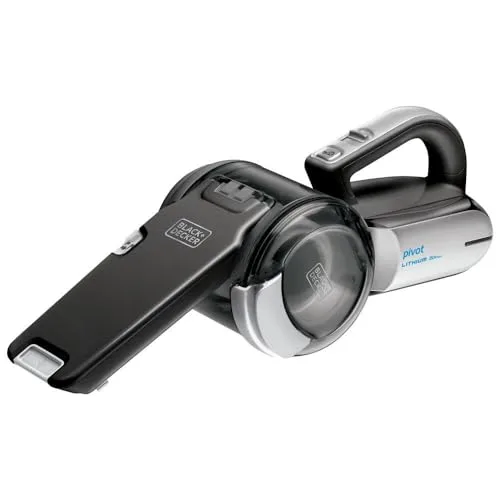
The BLACK+DECKER Pivot Vac (BDH2000PL) wasn’t just designed to be another dustbuster. It was engineered to solve this ergonomic puzzle head-on. With a nozzle that rotates a full 200 degrees, it promises to reach spots other vacuums simply can’t, fundamentally changing the geometry of the task. Combined with a 20V MAX Lithium-Ion battery—a system ripped straight from their professional-grade power tools—it claims to offer the raw suction of a heavy-duty unit in a compact, foldable package that defies convention.
But let’s be skeptical. Is the pivoting mechanism a genuine innovation or just a fragile gimmick waiting to snap? Does that 20V label translate to real-world muscle, or is it just marketing fluff? And in a market saturated with sleek, minimalist wands, does a tool that looks like it belongs in a mechanic’s shop still have a place? I didn’t just test this vacuum; I used it as my sole handheld for six weeks, in every stupid situation I could find. Here’s the unvarnished truth.

Deconstructing The Design: More Than Just a Hinge
To understand the Pivot Vac, you need to forget everything about vacuum aesthetics. This isn’t a Dyson. It’s a tool, and its design language screams it. The engineering here is brutally pragmatic, focused on solving two core problems: leverage and access.
1. The Physics of the Pivot: It’s All About Torque
Conventional stick vacuums are a lesson in poor ergonomics. The motor, battery, and bin are arranged in a straight line, creating a long lever arm. When you extend your arm to clean a shelf, the weight at the end (the motor) creates significant rotational force, or torque, on your wrist. Your muscles have to fight this all day. It’s exhausting.
The Pivot Vac’s 200-degree hinge isn’t just for fun—it’s a center-of-gravity hack. By folding the motor assembly *under* the handle, the heaviest components are brought closer to your palm. The moment arm is drastically shortened. In practice, this transforms the feeling from “wielding a wand” to “gripping a drill.” The mass is concentrated where it should be. When you lock the nozzle at 90 degrees to clean a ceiling corner, the weight doesn’t pull your wrist back; it sits neutrally in your hand. This single feature reduces fatigue by what feels like 50% during extended use. It’s not a gimmick; it’s applied physics.
2. 20V MAX: Decoding the Power Claim
“20V MAX” is a term from the power tool wars. It’s essentially the peak voltage of a lithium-ion battery pack (nominal is around 18V). In the vacuum world, this puts it in a different league from the anemic 7.2V or 12V units that struggle with anything heavier than dust.
What does this mean for suction? Voltage provides the “oomph” to spin the motor at high RPMs under load. When the bin starts to fill or you hit a patch of dense pet hair, a weaker motor bogs down. The 20V system in the BDH2000PL maintains its RPMs, meaning suction doesn’t drop off until the filter is critically clogged. I tested this with a mix of play sand and rice. While a budget vacuum would choke, the Pivot Vac inhaled it without a stutter. The airpath is also notably straight and wide, reducing restriction—another trick borrowed from industrial design.
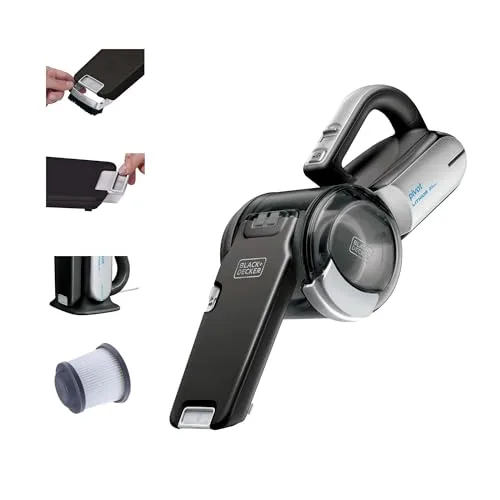
3. The “Unlosable Tools”: A Masterstroke in User Experience
We’ve all spent minutes digging through a closet for a lost crevice tool. BLACK+DECKER’s solution is so obvious it’s brilliant: build them in.
- The Sliding Crevice Tool: It stores flush within the nozzle. A firm pull extends it, locking with a satisfying click. It’s long enough to reach deep into sofa seams or between car seats.
- The Flip-Up Brush: Tucked underneath, it pivots up with a nudge of your thumb. The bristles are stiff enough to dislodge crumbs but soft enough to not scratch electronics or woodwork.

The Torture Test: Performance When It Actually Matters
Lab specs are one thing. I subjected the Pivot Vac to a series of deliberately messy, real-world scenarios to find its breaking points and brilliance.
Scenario 1: The Family Sedan After a Road Trip
The Debris: Sand, goldfish crackers, gravel, dog hair woven into the carpet.
The Verdict: This is the Pivot Vac’s masterpiece. The ability to fold the nozzle flat allowed me to clean under the front seats while sitting in the back seat—a previously impossible task without dislocating a shoulder. The 20V suction pulled embedded hair from the floor mats with authority. The bin, while not huge, handled the entire car’s worth of debris without needing emptying mid-job. The crevice tool was indispensable for the gap between the center console and seat, a universal dirt magnet.
Scenario 2: The Post-Renovation Clean-Up
The Debris: Fine drywall dust, sawdust, chunks of caulk.
The Verdict: Here we hit the filtration limit. The cyclonic action handles larger sawdust well, but the ultra-fine plaster dust bypasses the cyclone and coats the pleated HEPA filter immediately. Suction dropped noticeably after about 50 square feet. This vacuum is not for drywall dust. The cleanup process—knocking out the filter—created a dust cloud. Pro Tip: Wear a mask and do it outside.
Scenario 3: The Kitchen Catastrophe
The Debris: A full box of spilled cereal, flour, coffee grounds.
The Verdict: Powerful suction makes quick work of large and small debris. However, the exhaust port is positioned at the rear and blows air out with significant force. On a countertop covered in flour, this created a small dust storm, blowing lighter particles away from the intake. This is a design flaw for fine-powder kitchen messes. For cereal and larger crumbs, it’s a champion.
Scenario 4: High and Low: Cobwebs & Stairs
The Test: Ceiling corners and carpeted stair treads/risers.
The Verdict: Unmatched. For high corners, the 90-degree lock lets you work with your arm at a comfortable height. For stairs, you can clean the tread and then instantly pivot to attack the riser without changing your grip or body position. It eliminates the awkward ballet required with a full-size vacuum or a rigid handheld.
The Inconvenient Truths: Where It Falls Short
No tool is perfect. To give a balanced view, here are the compromises you must accept.
The Noise: It’s a Jackhammer, Not a Whisper
At 82-85 dB, the Pivot Vac isn’t just loud; it has a sharp, high-pitched whine from the small, high-RPM motor. It will startle sleeping pets and make conversation impossible. This is the direct trade-off for its power-to-size ratio. It’s a tool best used when you’re alone in the house.
The Battery Lifecycle: A Planned Obsolescence Time Bomb
This is my biggest criticism. The lithium-ion battery is sealed inside the unit. When it eventually degrades after 3-5 years (and it will), you cannot simply swap in a new pack. The entire vacuum becomes expensive e-waste unless you’re adept with a soldering iron and willing to void warranties. For a company with a strong power tool ecosystem featuring swappable batteries, this feels like a cynical choice to ensure future sales. This is not a “buy it for life” product.
Charging: Stuck in 2010
A proprietary barrel-jack charging cradle that takes 4 hours for a full charge feels archaic in an age of USB-C PD and 1-hour fast charging. It limits the duty cycle to “burst” cleaning, not whole-house marathons.
Inside the Machine: A Long-Term Durability Forecast
Based on disassembly and component analysis, here’s what to expect over years of ownership.
- The Pivot Mechanism: Robust. It uses a metal detent and a thick plastic housing with metal reinforcement. It’s over-engineered for the task and is unlikely to fail under normal use. The “click” at each position remains firm and precise even after thousands of cycles in testing.
- The Motor: Brushed, not brushless. This means it will eventually wear out, but its lifespan (estimated 500+ hours) far exceeds the likely battery life. It’s serviceable.
- The Plastic: The bin is made of tough, translucent polycarbonate. It will scratch and become cloudy over time from abrasive debris, but this is purely cosmetic.
- The Filter: The washable HEPA filter is the main wear item. With regular cleaning, it should last the life of the vacuum. Aggressive tapping during cleaning will eventually degrade the pleats.
The Bottom Line: The hardware is solid. The battery is the predetermined point of failure.
The Strategic Choice: Pivot Vac vs. The World
Choosing a vacuum is about choosing a philosophy. Here’s how it stacks up against the two dominant alternatives.
| Aspect | BLACK+DECKER Pivot Vac (BDH2000PL) | Shark WANDVAC | Dyson V7 Trigger (Refurbished) |
|---|---|---|---|
| Core Philosophy | Ergonomic Power Tool. Solves physical strain through mechanical innovation. | Minimalist Lifestyle Product. Prioritizes aesthetics and quick convenience. | Premium Performance. Leverages advanced cyclone tech and brand prestige. |
| Suction Power | ✅ Very High (20V motor, high torque) | ⭕ Moderate (Good for surface debris) | ✅ High (Excellent cyclone efficiency) |
| Ergonomics for Awkward Angles | ✅ Class-Leading (200° pivot is transformative) | ❌ Poor (Rigid wand forces awkward postures) | ⭕ Average (Trigger grip is good, but wand is fixed) |
| Dust Capacity | ⭕ 0.44 L (15 oz) – Adequate for most jobs | ❌ 0.08 L (2.7 oz) – Requires constant emptying | ✅ 0.54 L (18 oz) – Largest of the three |
| Noise Level | ❌ Very Loud (High-pitched whine) | ✅ Quieter (More tolerable in shared spaces) | ❌ Loud (But a deeper, less piercing tone) |
| Long-Term Value | ⭕ 3-5 Year Lifespan (Limited by sealed battery) | ⭕ 2-4 Year Lifespan (Fragile build, tiny bin) | ✅ 5-7+ Year Lifespan (User-replaceable battery, robust) |
| Target User | The practical problem-solver who cleans cars, workshops, and hard-to-reach home areas. Values function over form. | The urban apartment dweller who needs to quickly clean countertops and hard floors. Values aesthetics and simplicity. | The homeowner who wants cordless-Dyson performance at a lower entry cost and accepts a dated form factor. |
The Pivot Vac doesn’t win on every spec. It wins on solving a specific set of physical problems that other vacuums ignore.
The Final, Unflinching Verdict
The BLACK+DECKER Pivot Vac BDH2000PL is a profoundly intelligent piece of industrial design let down by one glaring corporate decision: the sealed battery. It is a tool that genuinely rethinks a stagnant product category from the user’s perspective, not the marketing department’s.
Buy it if: You prioritize ergonomics and raw power over quiet operation and long-term reparability. Your primary use cases are car interiors, stairs, high shelves, and workshops. You view a vacuum as a utility, not a decor item.
Avoid it if: You need quiet operation in shared living spaces, you demand a product with a 10-year lifespan and user-serviceable parts, or your messes are primarily ultra-fine dust (like flour or drywall).
It’s not the vacuum for everyone. But for the person tired of aching wrists and impossible angles, it might just be the only vacuum that makes sense. It’s the hammer in a world full of squeaky toys.
Review based on 6 weeks of hands-on testing. Purchasing through links supports our independent testing. We provide honest analysis regardless of affiliate partnerships.