Odvex.Admin
Find exactly what you need with the comprehensive reviews and guides at Odvex.
Introduction: Where Aesthetics Meet Audio Performance
For decades, the world of computer audio was dominated by cheap, plastic “multimedia” speakers that sounded as hollow as they looked, or utilitarian black boxes meant for recording studios that looked out of place in a living room. Finding the middle ground—speakers that offer high-fidelity sound while looking stylish enough for a modern white desktop setup—has always been a challenge.
The Edifier R1700BT (White Edition) attempts to bridge this gap. These are not just “computer speakers”; they are active, near-field monitors designed with a specific 10-degree angle to direct sound to your ears, not your chest. With 66 Watts of RMS power and built-in Bluetooth, they promise to fill a room with sound without the need for a bulky amplifier. But do they prioritize style over substance? In this review, we break down the build quality, sound signature, and daily usability to see if they are worth the investment.
Feature Analysis: Designed for the Desk
The 10-Degree Tilt Advantage
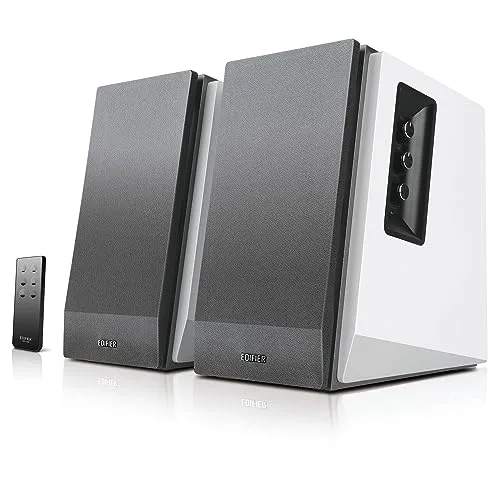
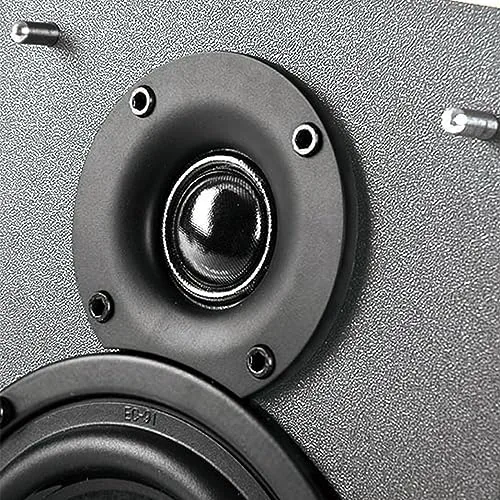
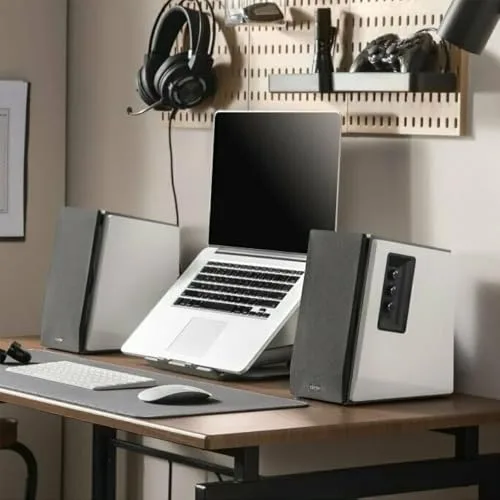
The most distinctive feature of the R1700BT is the physical cabinet design. Most bookshelf speakers fire straight ahead. If placed on a desk, the tweeter shoots sound at your torso, resulting in a loss of high-frequency detail. Edifier engineered these cabinets with a 10-degree upward tilt. This simple ergonomic choice ensures that when sitting at a desk, the 19mm “Eagle Eye” tweeters are aimed directly at your ears, creating a much clearer soundstage and phantom center image.
Power and Connectivity
Under the hood, these active speakers pack a punch with a total power output of 66W RMS (15W x 2 for treble + 18W x 2 for bass). This is significantly louder than most USB-powered competitors. The “BT” in the name stands for Bluetooth, allowing for seamless streaming from phones and tablets.
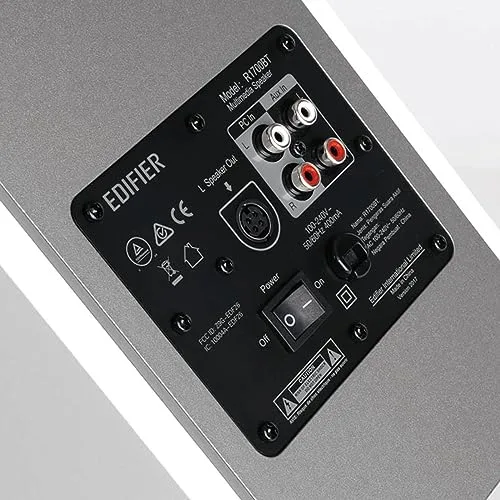
Crucially, Edifier includes two sets of RCA inputs on the back. This allows you to have your PC connected permanently while leaving a second port open for a turntable or gaming console, switchable via the remote. The integration of Digital Signal Processing (DSP) and Dynamic Range Control (DRC) is a technical safeguard designed to minimize distortion even when you crank the volume up.
Aesthetics and Build
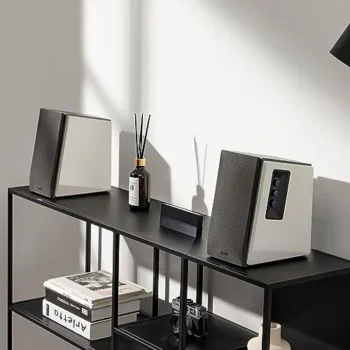
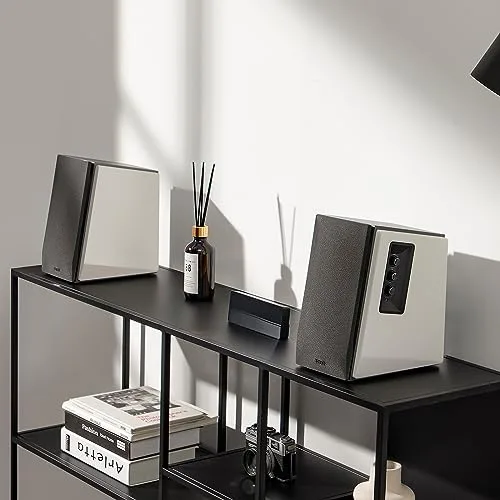
While the standard model comes in a classic wood grain, this White version features a clean, matte finish with grey accents on the side panels. The build quality feels dense and substantial thanks to the MDF (Medium Density Fiberboard) enclosure. This heavy construction dampens acoustic resonance, preventing the “boxy” vibration sounds often associated with cheaper plastic speakers.
Hands-On Experience: The Daily Driver
Setup and Controls
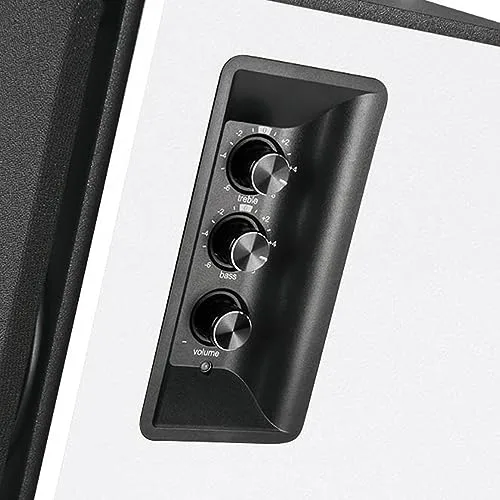
Setting up the R1700BT is straightforward: plug the active right speaker into the wall, connect the left speaker via the included 5-pin cable, and hook up your source. A thoughtful design choice is the placement of the control knobs. Instead of hiding them on the back, the Volume, Treble, and Bass dials are located in a recessed panel on the side of the right speaker. This makes tweaking the EQ on the fly incredibly easy.
The remote control, however, leaves something to be desired. It is a small, thin plastic wafer that feels easy to lose. While functional for volume and input switching, it doesn’t match the premium feel of the speakers themselves.
Sound Quality Performance
Highs and Mids: The 19mm silk dome tweeters deliver highs that are crisp and airy without being harsh or sibilant. Vocals in podcasts and music tracks come through with clarity, benefitting greatly from that upward tilt design.
Bass Response: The 4-inch bass driver, aided by a front-facing bass reflex port, performs admirably. The front-facing port is a critical feature for desktop users because it allows you to place the speakers closer to a wall without creating muddy, booming bass frequencies (a common issue with rear-ported speakers). The lows are punchy and tight, suitable for Pop, Jazz, and EDM, though sub-bass lovers might miss the rumble of a dedicated subwoofer.
Bluetooth Performance
Pairing is fast and reliable. While it doesn’t support high-end codecs like aptX HD, the standard streaming quality is perfectly adequate for Spotify or YouTube Music. The convenience of switching from PC audio to phone audio with a single click on the remote cannot be overstated for a home office environment.
Pros and Cons
| Pros | Cons |
|---|---|
| 10-degree angled design perfect for near-field desktop listening. | Remote control feels cheap and flimsy. |
| Front-facing bass port allows wall placement. | No optical input for TV connection. |
| Convenient side-panel controls for EQ and Volume. | Proprietary cable between left/right speakers limits spacing. |
| Excellent build quality with heavy MDF cabinets. | Bass is punchy but lacks sub-bass extension. |
| Rich, warm sound signature that is non-fatiguing. |
Product Comparison
How does the Edifier R1700BT stack up against a studio monitor and a budget option?
| Feature | Edifier R1700BT (Main) | PreSonus Eris E3.5 | Creative Pebble Pro |
|---|---|---|---|
| Sound Profile 🎵 | Warm / Musical (Fun) | Flat / Neutral (Studio) | Bright / Thin |
| Power (RMS) ⚡ | 66 Watts | 50 Watts | 10-30 Watts |
| Connectivity 🔌 | BT + Dual RCA | TRS + RCA + Aux | USB-C + BT |
| Design 📐 | Angled (Ergonomic) | Straight (Traditional) | Angled (Small) |
| Bass Port 💨 | Front (Easy Placement) | Rear (Needs Space) | Rear Passive |
Verdict: The King of Mid-Range Desktop Audio
The Edifier R1700BT White Edition remains one of the best value-for-money propositions in the audio market today. It occupies the sweet spot between “cheap computer speakers” and “expensive studio gear.” The inclusion of Bluetooth, the thoughtful angled design, and the front-facing bass port make it exceptionally versatile for small rooms, dorms, and home offices.
While audio purists looking for a strictly flat “studio monitor” sound for mixing might prefer the PreSonus Eris series, the Edifier R1700BT is arguably the better speaker for enjoying content. It sounds fun, looks sophisticated, and delivers power well beyond its size. If you want to upgrade your desktop audio experience without needing a separate amplifier or subwoofer, this is the set to buy.
Read more articles on this topic: Speaker.