Odvex.Admin
Save time and money by checking the latest rankings and discounts on Odvex.
Introduction: The 12GB Anomaly in a VRAM-Hungry World
The modern GPU market is often a confusing landscape of diminishing returns, where newer doesn’t always mean “future-proof.” Gamers building mid-range PCs face a difficult choice: overspend on high-tier cards or settle for budget options that struggle with modern textures. The MSI Gaming GeForce RTX 3060 12GB occupies a unique, almost defiant position in this lineup. While many newer mid-range cards are shipping with a paltry 8GB of VRAM, this Ampere-based card boasts a massive 12GB buffer.
But does sheer memory capacity make up for an older architecture? This review strips away the marketing hype to analyze the practical value of the MSI RTX 3060 Ventus 2X OC edition. We are looking at thermal efficiency, the reality of 192-bit bus limitations, and whether this card is the definitive solution for high-fidelity 1080p and entry-level 1440p gaming.

Features and Technical Analysis
The core proposition of this MSI card is balance. It isn’t trying to be a 4K monster; it is trying to be the card that doesn’t crash when you max out texture settings in Hogwarts Legacy or The Last of Us Part I.
The 12GB VRAM Advantage
The standout feature here is undoubtedly the 12GB of GDDR6 memory. In an era where unoptimized PC ports are consuming 10GB+ of VRAM at 1080p, this headroom is critical. Unlike 8GB cards that may suffer from stuttering (1% lows) when memory is filled, the RTX 3060 maintains smooth frame times. However, it is important to note the 192-bit memory interface. While you have a lot of capacity, the bandwidth is lower than the 256-bit bus found on higher-tier cards, which can limit performance at higher resolutions.
Torx Fan 3.0 Cooling Solution
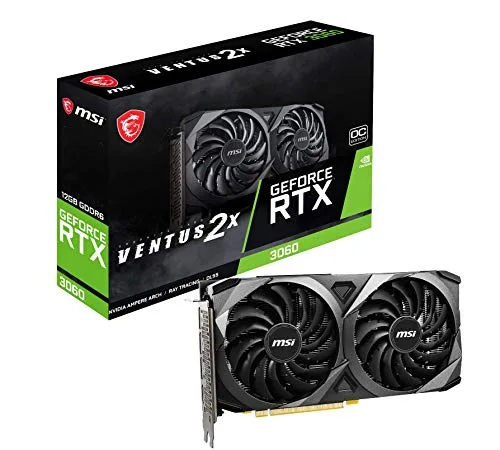
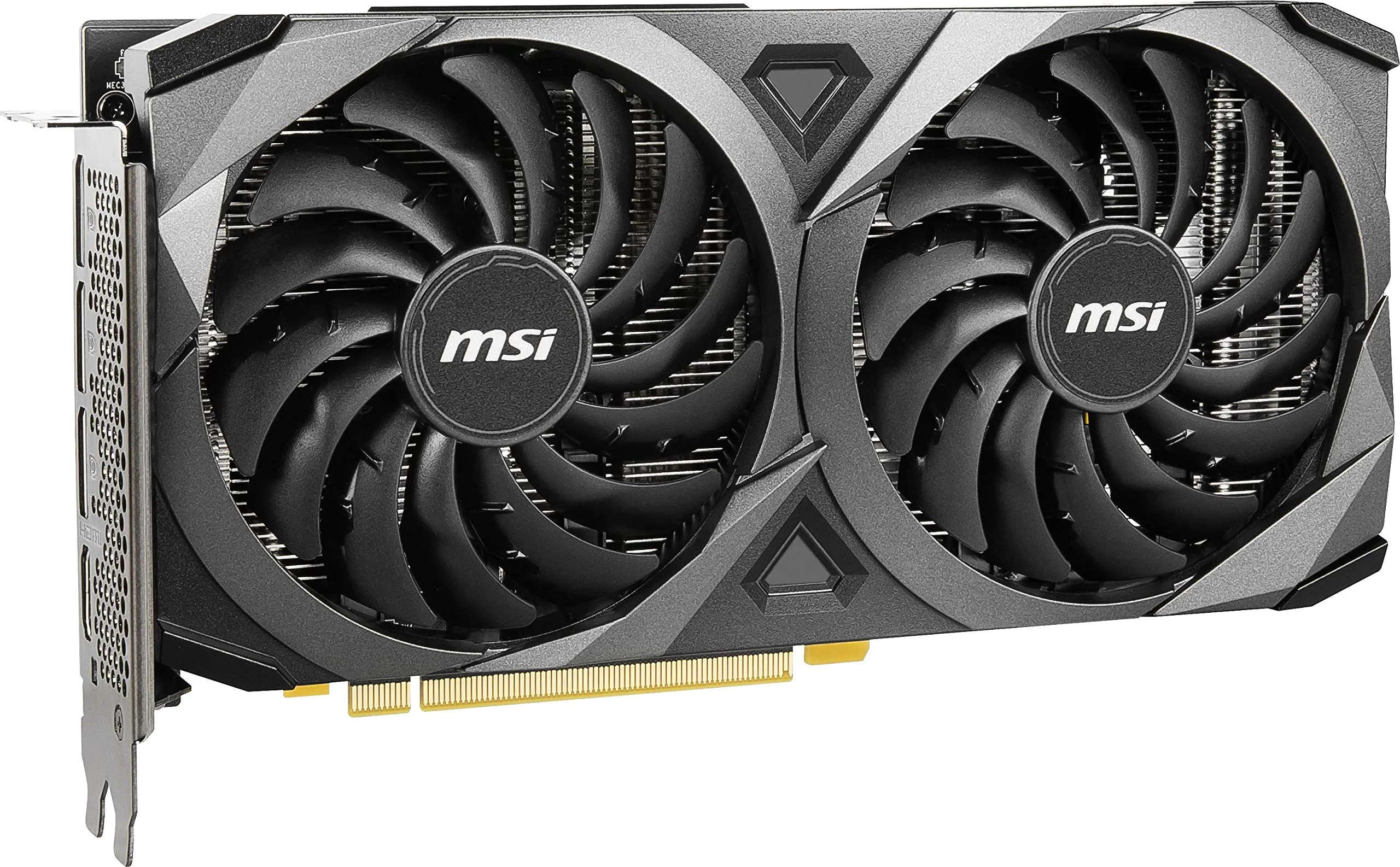
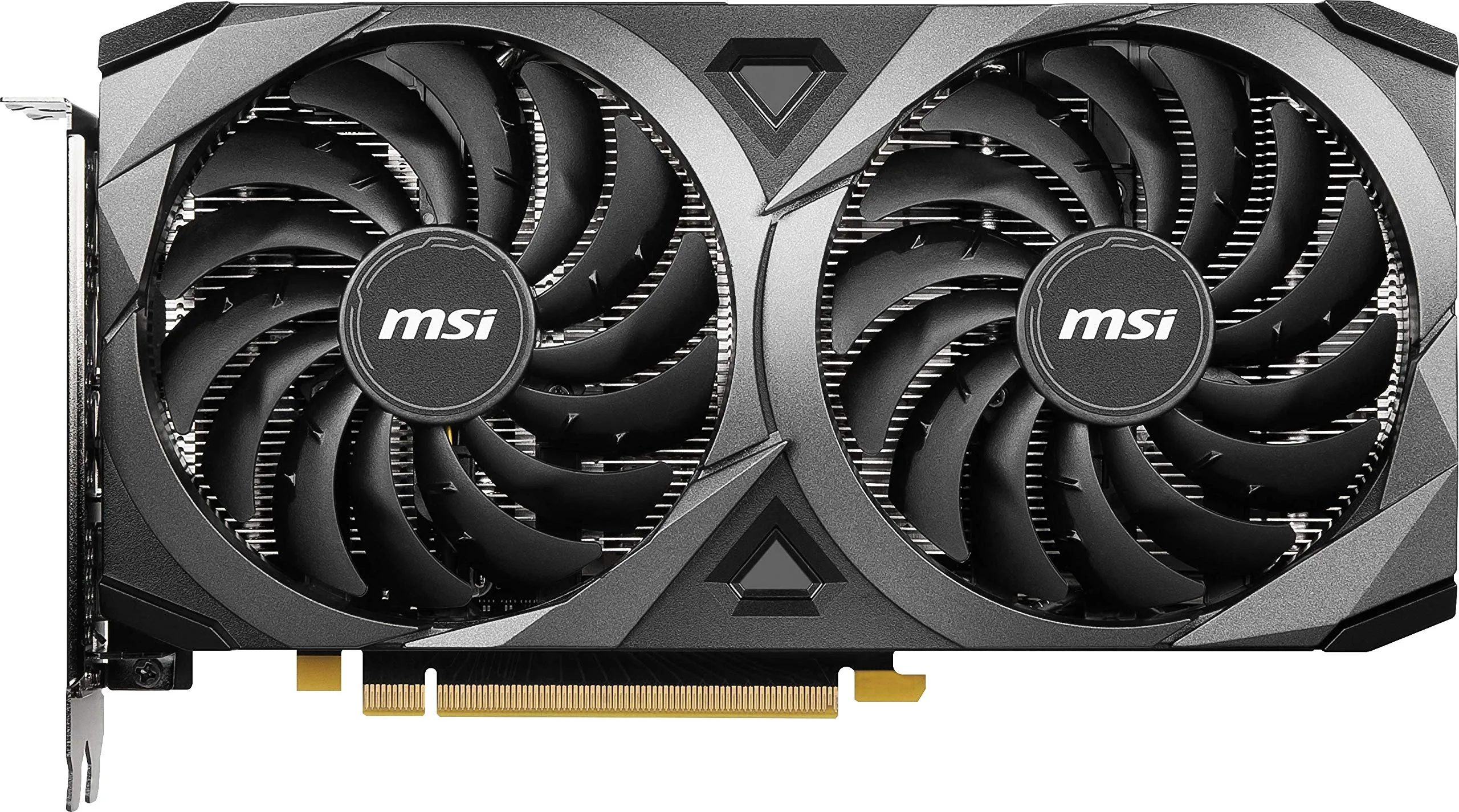
MSI utilizes their signature dual-fan design here. The dispersion fan blades have a steeper curved blade which accelerates airflow, while the traditional blades provide steady pressure to the heatsink. This is a compact “Ventus” design, meaning it fits into smaller cases easily, but it lacks the massive thermal mass of the “Gaming X” trio variants. The focus here is on utilitarian efficiency rather than RGB flair or whisper-quiet operation under extreme loads.
Ampere Architecture & DLSS
Being an RTX card, you get access to NVIDIA’s full suite of features:
- DLSS (Deep Learning Super Sampling): This is the card’s lifeline for longevity, using AI to upscale lower resolutions to boost frame rates without significant visual loss.
- Ray Tracing: While supported, the 3060 is an entry-level ray tracing card. Don’t expect to max out RT settings without heavy reliance on DLSS.
- NVIDIA Reflex: Vital for competitive shooters to reduce system latency.
Hands-On Experience: Performance and Thermals
After putting the MSI RTX 3060 through a variety of scenarios ranging from productivity work to intense gaming sessions, a clear picture emerges of its capabilities and limitations.
Installation and Build Quality
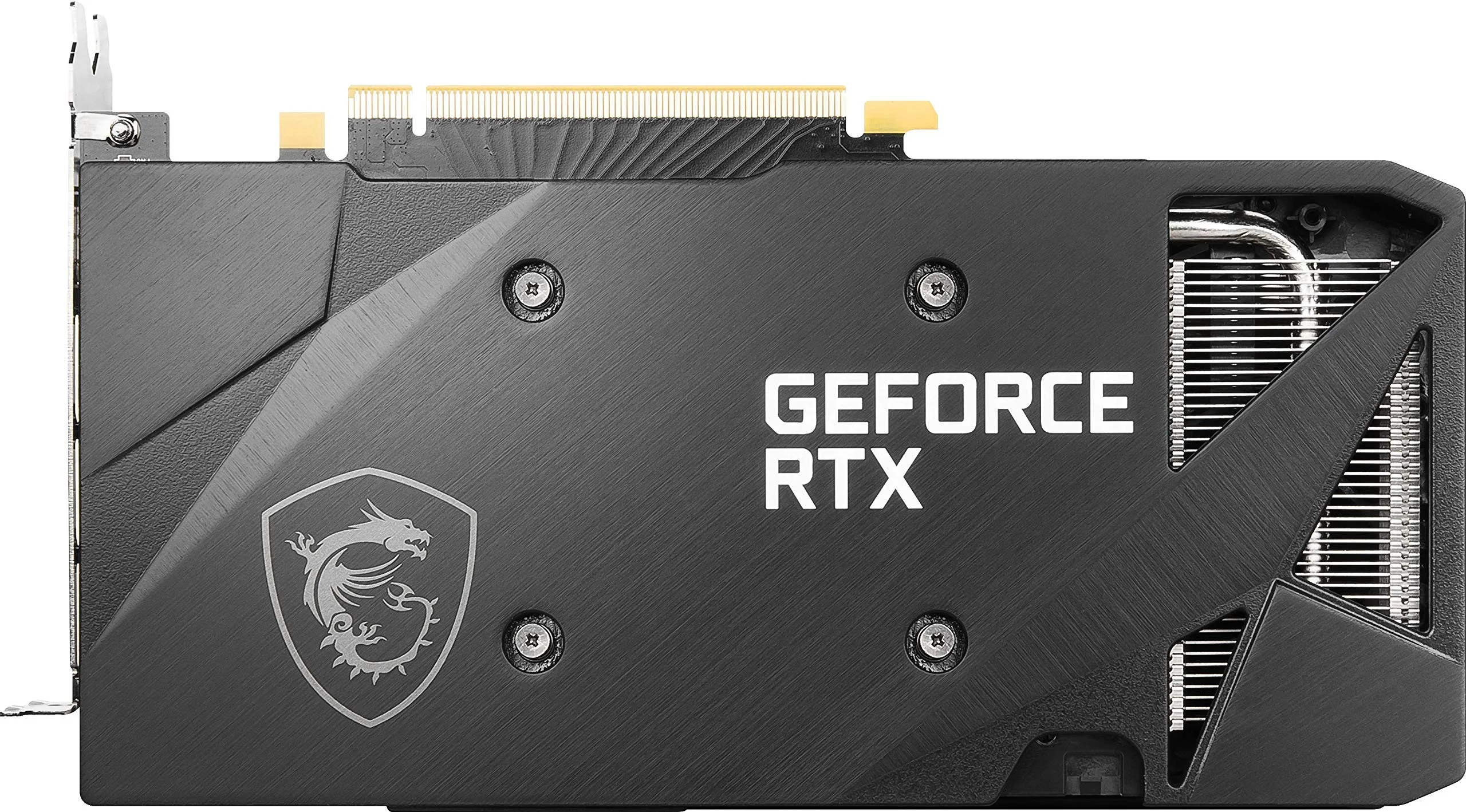
The card is refreshingly compact. Unlike the brick-sized RTX 40-series cards, this dual-slot GPU fits comfortably in mid-tower and even some Micro-ATX cases. The backplate, while appearing to be brushed metal, is actually plastic. While this helps with aesthetics and basic protection, it does not offer the same passive heat dissipation as a metal backplate. The reinforcement strip is a nice touch, preventing PCB sag, which is rarely an issue on cards of this size anyway.
Gaming Performance
1080p Ultra: This is the card’s sweet spot. In titles like Cyberpunk 2077 and Red Dead Redemption 2, the card delivers playable frame rates (60+ FPS) at high settings, provided you manage Ray Tracing expectations. The 12GB buffer shines in texture-heavy games, preventing the dreaded texture pop-in seen on 8GB cards.
1440p Gaming: The card is capable of 1440p, but it requires compromise. You will likely need to engage DLSS “Balanced” mode or lower settings to Medium-High to maintain a locked 60 FPS in modern AAA titles.
Thermal & Acoustic Performance
The “Zero Frozr” technology works as advertised; the fans stop completely during desktop use or light browsing, resulting in a silent operation. Under load, the fans ramp up audibly. Because the heatsink is smaller than three-fan models, the fans have to spin faster to dissipate heat. Temps generally hovered around 70°C to 75°C in a well-ventilated case. It’s not the coolest card on the market, but it stays well within safe operating limits without thermal throttling.
Pros and Cons
| Pros | Cons |
|---|---|
| 12GB VRAM: Excellent future-proofing for high-resolution textures. | Plastic Backplate: Feels cheaper and offers less heat dissipation than metal. |
| Compact Form Factor: Fits in almost any standard PC case easily. | 192-Bit Bus: Memory bandwidth limits performance at resolutions above 1440p. |
| Zero Frozr: Completely silent operation when not gaming. | Ray Tracing Tax: Significant performance hit with RT on; relies heavily on DLSS. |
| DLSS Support: Extends the lifespan of the card significantly in newer titles. | Price Volatility: Often priced too close to the faster RTX 3060 Ti or 4060. |
Competitive Comparison
To understand the value proposition, we must compare the RTX 3060 12GB against its direct successor and a budget alternative.
| Feature | MSI RTX 3060 12GB (This Review) | NVIDIA RTX 4060 (Competitor) | AMD Radeon RX 6600 (Budget) |
|---|---|---|---|
| VRAM Capacity 💾 | 12 GB GDDR6 | 8 GB GDDR6 | 8 GB GDDR6 |
| Upscaling Tech 🤖 | DLSS 2 (Standard) | DLSS 3 (Frame Gen) | FSR (Open Source) |
| 1080p Performance 🚀 | High | Very High | Moderate |
| Ray Tracing 🔦 | Good | Better | Poor |
| Bus Width 🛣️ | 192-bit | 128-bit | 128-bit |
Analysis: The RTX 4060 offers newer architecture and Frame Generation (DLSS 3), which is a massive advantage for smoothness. However, it is often hamstrung by its 8GB VRAM limit in texture-heavy scenarios. The RTX 3060 12GB remains the better choice for content creators or gamers who prioritize texture quality and VRAM headroom over raw frame generation tricks.
Final Verdict
The MSI Gaming GeForce RTX 3060 12GB OC is a pragmatic survivor. It is not the fastest card on the block, nor is it the newest. However, it addresses a specific pain point that even newer cards ignore: VRAM capacity. By offering 12GB of memory, MSI ensures that this card will age more gracefully than its 8GB competitors when it comes to texture resolution and modding capabilities.
For gamers targeting 1080p Ultra or 1440p High (with DLSS), this is a reliable workhorse. The cooling is adequate for the form factor, and the compact size makes it versatile for upgrades. If you are building a PC for video editing or 3D rendering on a budget, the extra VRAM makes this practically the only choice in its price bracket. However, if your sole focus is high-refresh-rate competitive shooters, the newer RTX 4060 might offer slightly better raw speed.
Bottom Line: Buy this if you want a card that prioritizes texture quality and longevity over the latest AI frame generation gimmicks.
Read more articles on this topic: Games.