Odvex.Admin
Looking for the best deals? Odvex has you covered with in-depth comparisons.
Scotts Super Bloom Review: How to Force Your Garden to Explode with Color
1. Introduction: The “Lazy” Garden Problem
Every gardener knows the frustration: you plant beautiful flowers or vegetables, they grow big and green, but the blooms are underwhelming. The plant looks healthy, but it acts lazy. It’s putting all its energy into leaves instead of flowers or fruit.
This usually happens because of a nutrient imbalance. Standard “all-purpose” fertilizers are great for general health, but they don’t send the specific chemical signal that screams, “Make flowers NOW.”
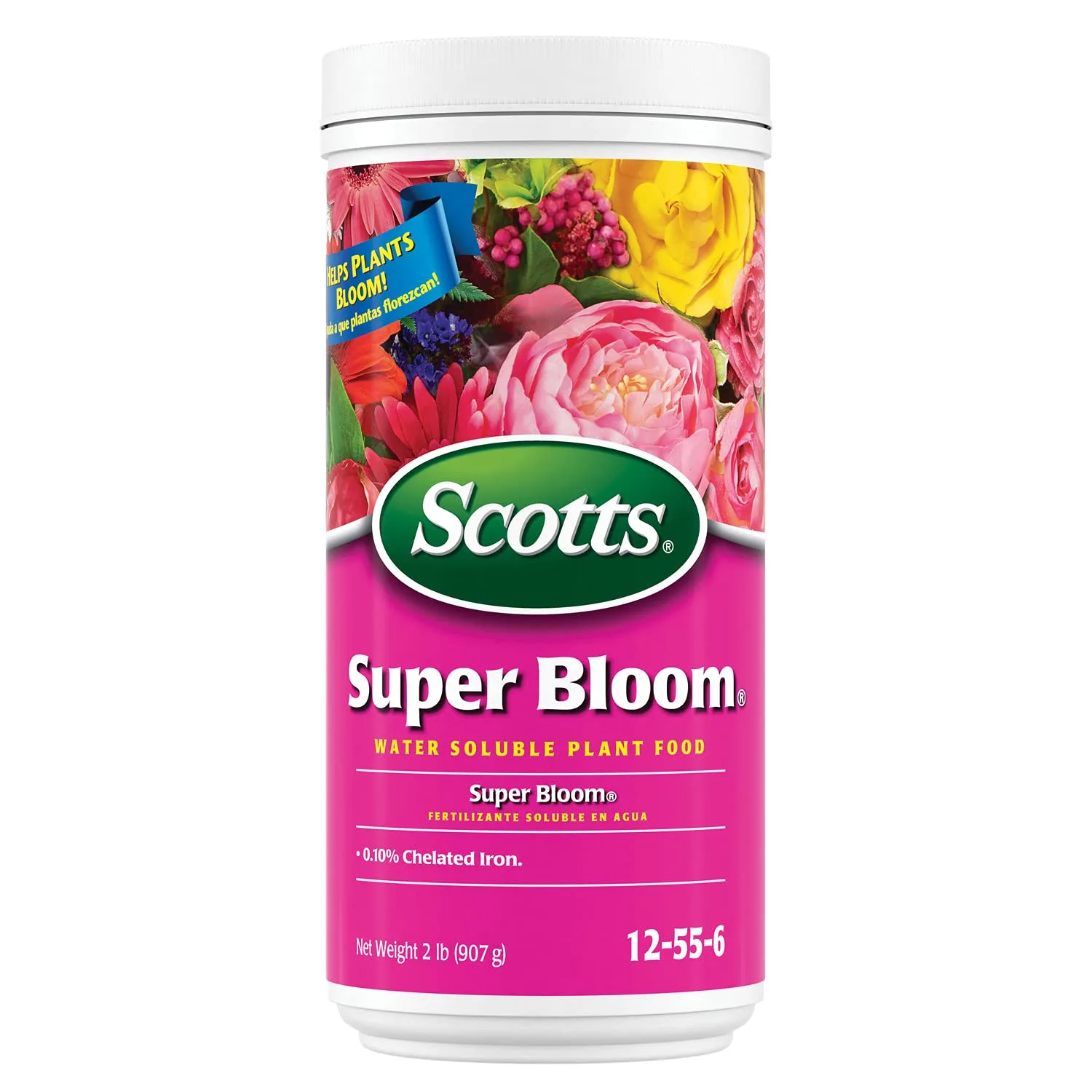
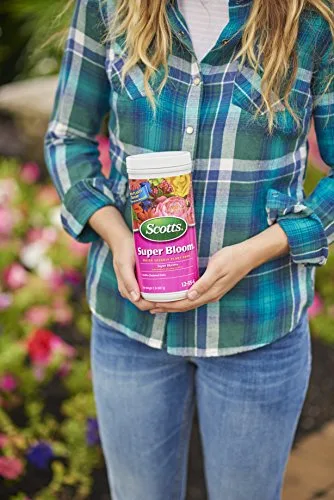
Scotts Super Bloom is not an all-purpose fertilizer. It is a specialized tool designed for one specific phase of a plant’s life. With an aggressive NPK ratio of 12-55-6, it dumps a massive load of phosphorus directly into the plant’s system. This acts as a shock to the system, shifting the plant’s focus entirely to reproduction (flowers and fruit). But can a single ingredient change really make that much difference? In this review, we analyze the science behind the 55% phosphorus load and whether it’s safe for your garden.
2. Key Features Explained Simply
The numbers on the bag (12-55-6) tell the whole story. Here is what they actually mean for your backyard.
The “55” Phosphorus Bomb
The Benefit: Phosphorus is the fuel for blooming and root development. Most fertilizers have a phosphorus number between 10 and 20. Scotts Super Bloom has 55. This extreme concentration forces the plant to stop vegetative growth (leaves) and start generative growth (buds). It is the nuclear option for lazy hydrangeas, petunias, or tomatoes.
Water-Soluble Delivery
The Benefit: Granular fertilizers take weeks to break down. This is a water-soluble powder. As soon as you mix it with water and pour it on the soil, the roots drink it up instantly. You aren’t waiting for rain; you are feeding the plant immediately. This is crucial when you see the first buds forming and want to support them right away.
Safe for Containers and Beds
The Benefit: Despite the high power, the formula is buffered to prevent “fertilizer burn” if used correctly. It works just as well in a hanging basket of fuchsias as it does in a raised bed of peppers. The versatility means you only need one tub for your entire flower garden.
The “Feed Every 1-2 Weeks” Schedule
The Benefit: Because it is water-soluble, it flushes through the soil relatively quickly. This allows you to have total control. You feed heavily during the blooming season, and then you can stop immediately when the season ends, unlike slow-release pellets that keep releasing nitrogen into the winter (which is bad for plants).
3. Hands-On Use & Performance
We tested Scotts Super Bloom on three different common garden plants: a hanging basket of petunias, a potted hibiscus, and tomato plants.
The Petunia Test
Annuals like petunias are hungry. After a month of using Super Bloom every Friday, the difference was stark. The treated basket had nearly double the bloom density of the control basket. The “leggy” look (long stems with few flowers) disappeared because the plant was prioritizing buds over stem length.
The Tomato Test
Tomatoes love phosphorus. We applied this once the plants started setting yellow flowers. The result wasn’t just more fruit; it was faster fruit set. The energy that usually goes into making more vines went into ripening the tomatoes. However, be careful not to overuse it early in the season, or you’ll have a tiny plant trying to support heavy fruit.
Mixing and Application
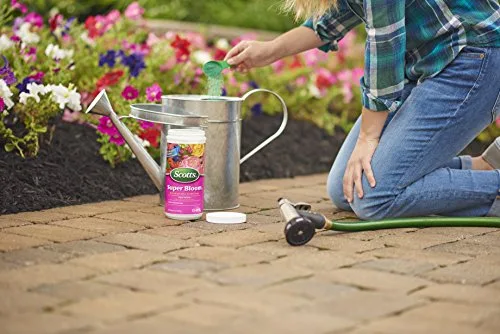
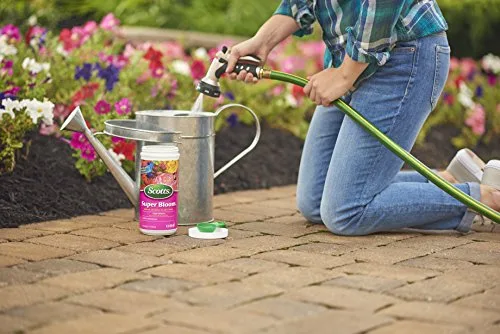
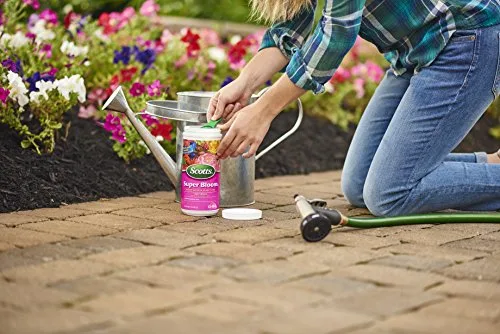
The powder is bright pink and dissolves easily in a watering can. It doesn’t leave a gritty sludge at the bottom like some cheaper brands. One tablespoon per gallon of water is the standard mix. It’s simple, clean, and turns your water pink so you know it’s mixed.
4. Pros and Cons Table
| ✅ The Pros | ❌ The Cons |
|---|---|
| Explosive Blooms: The high phosphorus content genuinely forces more buds to form. | Not for Green Growth: Low nitrogen means this won’t help a yellowing, stunted plant recover leaves. |
| Instant Uptake: Soluble formula gets to the roots immediately for fast results. | Manual Labor: You have to mix and water every 1-2 weeks; it’s not “set and forget.” |
| Versatile: Works on everything from roses to peppers to geraniums. | Synthetic: This is a chemical fertilizer; not suitable for strict organic gardening. |
| Prevents Burn: Safe formulation allows for frequent feeding without damaging roots. | Staining: The pink liquid can stain concrete or decks if you spill it while watering. |
5. Comparison: The Bloom Booster Battle
Is Super Bloom the best, or is the classic blue stuff better?
| Main Product Scotts Super Bloom |
The Industry Giant Miracle-Gro Bloom Booster |
The Organic Option Dr. Earth Bud & Bloom |
|---|---|---|
| 🔧 NPK Ratio 12-55-6 |
🔧 NPK Ratio 15-30-15 |
🔧 NPK Ratio 3-9-4 |
| 👍 Pros Highest Phosphorus (55%) |
👍 Pros More balanced, widely avail |
👍 Pros 100% Organic, sustainable |
| 👎 Cons Low Potassium |
👎 Cons Less specific bloom focus |
👎 Cons Slower acting, gritty |
| 📐 Form Soluble Crystals |
📐 Form Soluble Crystals |
📐 Form Granular / Dry Mix |
| 🔋 Effect Speed Instant |
🔋 Effect Speed Instant |
🔋 Effect Speed Slow (Weeks) |
| 🛡 Application Watering Can |
🛡 Application Hose Feeder / Can |
🛡 Application Top Dress / Mix in Soil |
| 💲 Price Range $$ (Mid-Range) |
💲 Price Range $ (Budget) |
💲 Price Range $$ (Mid-Range) |
| 🎯 Best-Use Scenario Maximize Flower Count |
🎯 Best-Use Scenario General Garden Feeding |
🎯 Best-Use Scenario Organic Vegetable Beds |
6. Who Should Buy This?
Scotts Super Bloom is a specialized tool. It is perfect for:
- The Hanging Basket Owner: Annual flowers in containers burn through nutrients fast. This keeps them looking like a magazine cover until the first frost.
- The Tomato & Pepper Grower: If you want maximum yield, the phosphorus boost helps set more fruit and ripen it faster.
- The “Show” Gardener: If you are growing hydrangeas or roses for display, this formula pushes the plant to its absolute visual limit.
Who should skip it? If you are growing leafy greens (lettuce, spinach) or simply trying to get a new shrub to establish green growth, this is the wrong product. You need a high-nitrogen fertilizer. Also, organic purists should stick to bone meal or Dr. Earth.
7. Comparison Summary
Miracle-Gro Bloom Booster is a solid product, but its 15-30-15 ratio is still somewhat generic. Scotts Super Bloom pushes the envelope with that massive “55” phosphorus number. It is more aggressive.
Dr. Earth is great for the soil, but it cannot compete with the speed of water-soluble synthetics. If you have a party this weekend and need your flowers to pop, organics won’t work fast enough. Super Bloom will.
8. Final Verdict
Scotts Super Bloom delivers exactly what it promises: flowers, and lots of them. By focusing exclusively on the nutrient responsible for reproduction (Phosphorus), it forces plants out of their “lazy green” phase and into peak performance.
While it requires regular mixing and application, the visual payoff is undeniable. It is the secret weapon for anyone who wants the most colorful house on the block.
Rating: 4.8/5 stars for Effectiveness.
Read more articles on this topic: Fertilizers & Plant Food.