Odvex.Admin
Discover top-rated gear, software, and tools at Odvex, the review experts.
Tamron 17-70mm f/2.8 Di III-A VC RXD Review: The “One Lens” Solution for Sony Users
1. Introduction: The End of the Kit Lens Era
If you shoot with a Sony APS-C camera (like the a6000 series or ZV-E10), you are likely familiar with the “Lens Dilemma.” You want a lens that zooms far enough for portraits, goes wide enough for landscapes, works in low light, and stabilizes your shaky video footage. For years, that lens didn’t exist. You had to carry three different lenses to cover those bases.
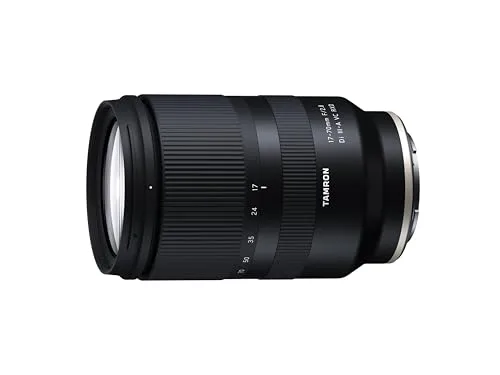
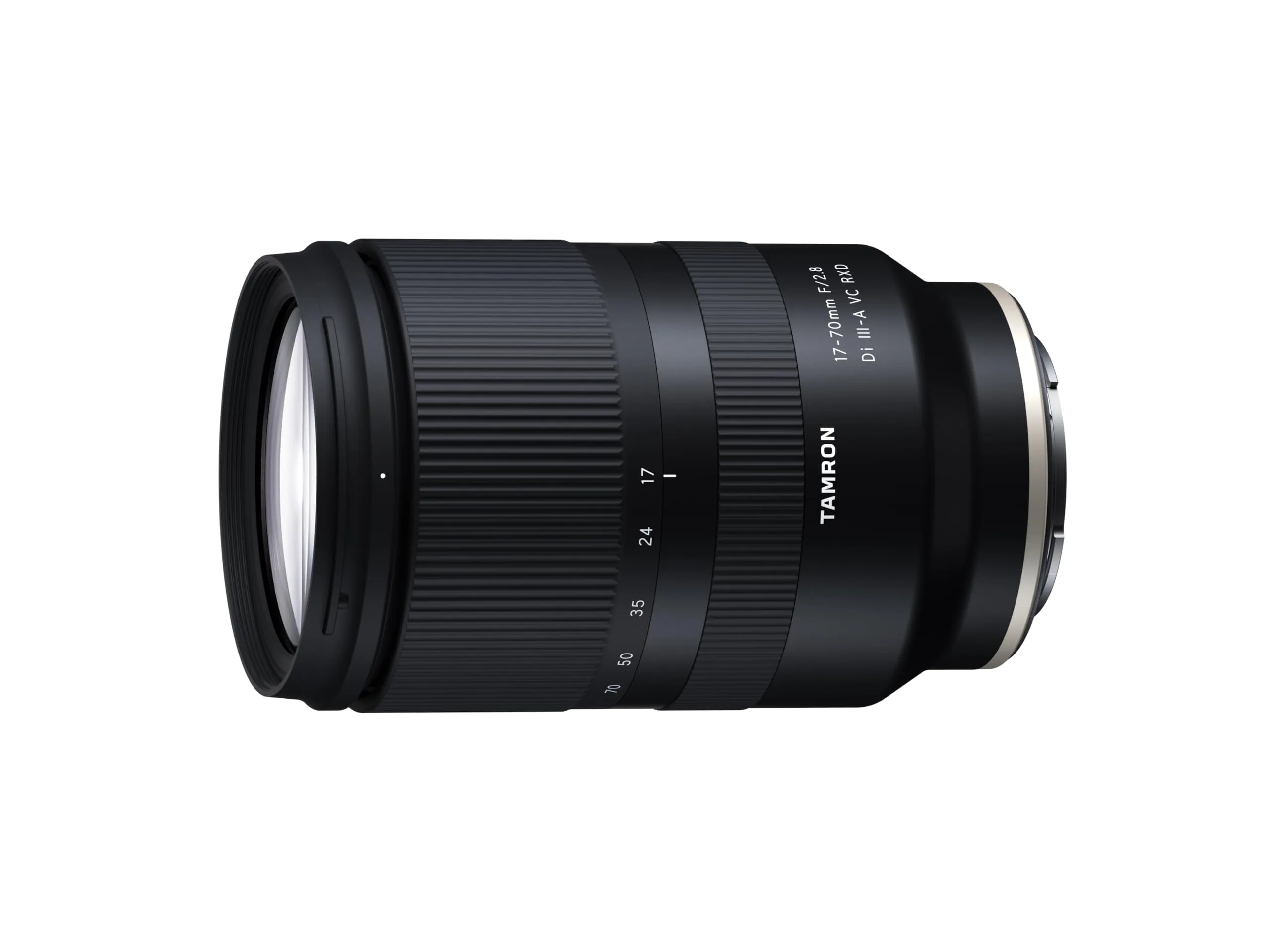
The Tamron 17-70mm f/2.8 Di III-A VC RXD changes the math. It is the world’s first standard zoom lens for APS-C mirrorless cameras to combine a versatile 4.1x zoom range with a fast, constant f/2.8 aperture. It promises to replace your kit lens, your portrait prime, and your wide-angle lens in one go.
But combining all these features usually comes with trade-offs: size, weight, or softness. Is this truly the “Holy Grail” lens for Sony shooters, or is it too good to be true? In this review, we strip away the marketing hype to analyze the real-world performance of this ambitious optic.
2. Key Features Explained Simply
This lens packs a lot of technology into a polycarbonate shell. Here is what the specs actually mean for your photography and filmmaking.
The 17-70mm Range (25.5-105mm Equivalent)
The Benefit: Most standard zooms stop at 50mm or 55mm. That extra reach to 70mm is significant. It takes you from a standard “normal” view to a true telephoto portrait length. You can capture wide landscapes at 17mm and then instantly zoom in to compress the background for a flattering headshot at 70mm, all without changing lenses.
Constant f/2.8 Aperture
The Benefit: Unlike your kit lens, which gets darker as you zoom in (f/5.6), this lens stays bright at f/2.8 throughout the entire zoom range. This allows you to shoot in dimly lit venues without cranking your ISO, and it gives you that professional-looking blurry background (bokeh) that separates your subject from the clutter.
Vibration Compensation (VC)
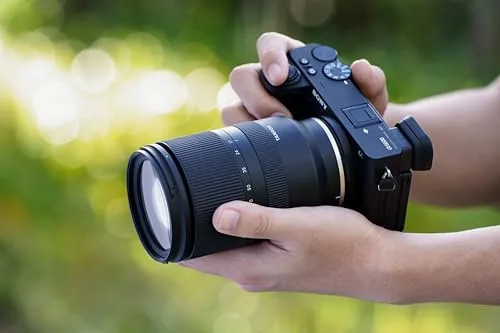
The Benefit: Many Sony APS-C bodies (like the a6100, a6300, a6400, and ZV-E10) lack In-Body Image Stabilization (IBIS). Without stabilization, handheld video is jittery and low-light photos are blurry. The Tamron’s built-in VC acts as a stabilizer, smoothing out handheld micro-jitters. For vloggers and low-light shooters, this feature alone is worth the price of admission.
RXD Autofocus Motor
The Benefit: The “Rapid eXtra-silent stepping Drive” is a fancy way of saying the focus motor is silent and fast. It is fully compatible with Sony’s Eye-AF and Real-Time Tracking. It doesn’t hunt or make grinding noises that ruin video audio.
3. Hands-On Use & Performance
We tested the Tamron 17-70mm on a Sony a6600 and a ZV-E10 to see how it handles in the field.
Build Quality & Ergonomics
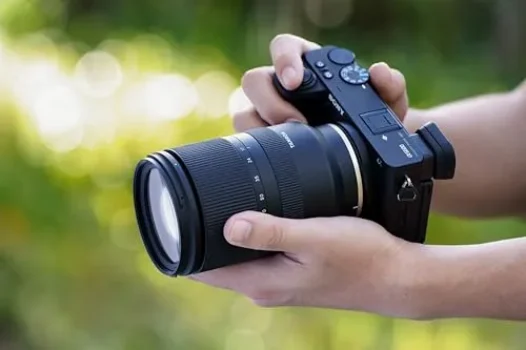
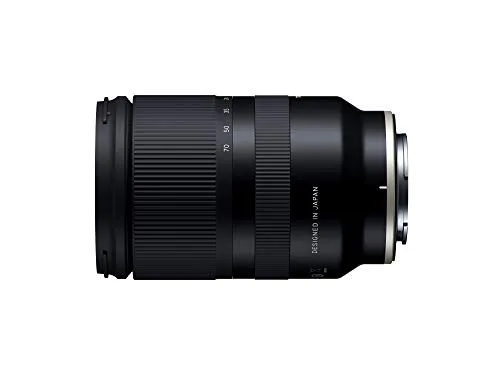
The lens is built from a high-grade polycarbonate. It feels durable but lightweight (525g). However, it is physically long. On a tiny body like the ZV-E10, it can feel front-heavy. It is weather-sealed (moisture-resistant), which gives peace of mind when shooting outdoors, and the fluorine coating on the front element makes wiping off fingerprints surprisingly easy.
Image Quality
Sharpness is excellent. Even at f/2.8, the center is crisp. The corners are softer at 17mm wide open but sharpen up nicely by f/4. The lens handles chromatic aberration well, meaning you won’t see much purple fringing around high-contrast edges. The bokeh is smooth, thanks to the 9-blade diaphragm, making portraits look distinctly professional.
Video Performance
For video, the VC stabilization is impressive. While it won’t replace a gimbal for running shots, it smooths out the “walking shake” significantly better than non-stabilized lenses. The autofocus is sticky and reliable. The main downside for video is focus breathing—as you change focus from near to far, the image zooms in slightly. It’s noticeable but manageable for most content creators.
Macro Capability
While not a true macro lens, you can focus as close as 7.5 inches at the wide end. This allows for creative “wide-angle macro” shots where the subject is huge in the foreground while still showing the environment behind them.
4. Pros and Cons Table
| ✅ The Pros | ❌ The Cons |
|---|---|
| Unmatched Versatility: The 4.1x zoom range covers 90% of shooting needs. | Size: It is physically long and can feel unbalanced on smaller Sony bodies. |
| Stabilization (VC): A lifesaver for Sony cameras that lack IBIS (like the a6400/ZV-E10). | Focus Breathing: Noticeable changes in framing when pulling focus (video issue). |
| Sharpness: Delivers prime-lens levels of sharpness in the center of the frame. | Onion Ring Bokeh: Out-of-focus highlights can sometimes show texture (onion rings). |
| Weather Sealing: Moisture-resistant construction is rare at this price point. | No Switches: No physical AF/MF or VC On/Off switches on the lens barrel. |
5. Comparison: The APS-C Battleground
How does the Tamron stack up against the premium Sony option and the compact Sigma rival?
| Main Product Tamron 17-70mm f/2.8 |
The Premium Rival Sony E 16-55mm f/2.8 G |
The Compact Rival Sigma 18-50mm f/2.8 |
|---|---|---|
| 🔧 Key Features VC Stabilization, Long Range |
🔧 Key Features Premium Build, Widest Angle |
🔧 Key Features Tiny Size, Lightweight |
| 👍 Pros Best All-Rounder, Stabilized |
👍 Pros Tactile buttons, Sharpest |
👍 Pros Fits in a pocket, Cheap |
| 👎 Cons Bulky size |
👎 Cons Very Expensive, No OSS |
👎 Cons Short range, No OSS |
| 📐 Weight 525g (Medium) |
📐 Weight 494g (Medium) |
📐 Weight 290g (Ultralight) |
| 🔋 Stabilization ✅ Yes (VC) |
🔋 Stabilization ❌ No (Relies on Body) |
🔋 Stabilization ❌ No (Relies on Body) |
| 🛡 Durability Weather Sealed |
🛡 Durability Weather Sealed |
🛡 Durability Weather Sealed |
| 💲 Price Range $$ (Great Value) |
💲 Price Range $$$$ (Premium) |
💲 Price Range $ (Budget) |
| 🎯 Best-Use Scenario Video, Travel, Events |
🎯 Best-Use Scenario Pro Landscape/Architecture |
🎯 Best-Use Scenario Hiking & Street Photo |
6. Who Should Buy This?
The Tamron 17-70mm fits specific user profiles perfectly:
- The Vlogger / YouTuber: If you use a ZV-E10 or a6400, the Vibration Compensation (VC) is essential for handheld shots. The 17mm width is great for talking to the camera, and the 70mm is perfect for B-roll detail shots.
- The Travel Photographer: If you only want to pack one lens for a trip to Europe or a hike in the national parks, this is it. It covers every focal length you realistically need.
- The Event Shooter: The constant f/2.8 aperture allows you to shoot weddings or concerts in varying lighting conditions without changing lenses.
Who should skip it? If you want the absolute smallest setup possible for street photography, get the Sigma 18-50mm. It is significantly smaller and less conspicuous.
7. Comparison Summary
The Sony 16-55mm f/2.8 G is optically superior and slightly wider, but it lacks stabilization and costs nearly double. Unless you have a stabilized body (a6600/a6500) and deep pockets, it’s a hard sell.
The Sigma 18-50mm f/2.8 is a marvel of compactness. It is fantastic for travel, but you lose 20mm of reach on the long end and, crucially, you lose the optical stabilization.
The Tamron 17-70mm sits in the Goldilocks zone. It offers the most reach, the necessary stabilization, and a competitive price point.
8. Final Verdict
The Tamron 17-70mm f/2.8 Di III-A VC RXD is arguably the most useful lens ever made for the Sony APS-C system. It solves the biggest complaints of Sony users: lack of stabilization and lack of affordable, fast zoom lenses.
While it is larger than its competitors, the trade-off is worth it for the incredible versatility. It creates sharper images, steadier video, and better bokeh than any kit lens could dream of. For 95% of Sony APS-C shooters, this is the only lens you need.
Rating: 5/5 stars – The Essential Upgrade.
Read more articles on this topic: Lens.