Odvex.Admin
Join thousands of smart shoppers relying on Odvex for better purchasing decisions.
🎯 The ASUS ROG Strix G18: Raw, Unfiltered Power
Let’s cut right to the chase. If you’re looking at the ASUS ROG Strix G18, you’re not shopping for a laptop. You’re shopping for a statement. This is a machine that laughs at the concept of “good enough.” It’s built with one goal: to house the absolute fastest mobile hardware available and to let it run wild, without holding back. This is a desktop replacement in the truest, most uncompromising sense.
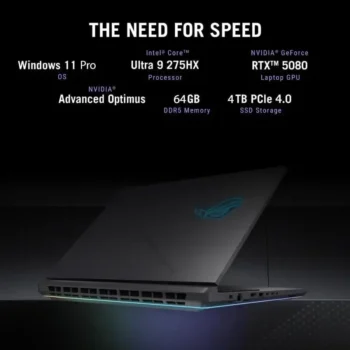
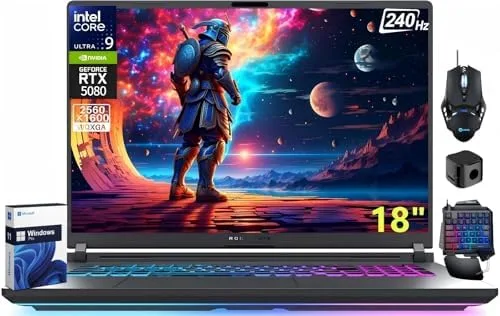
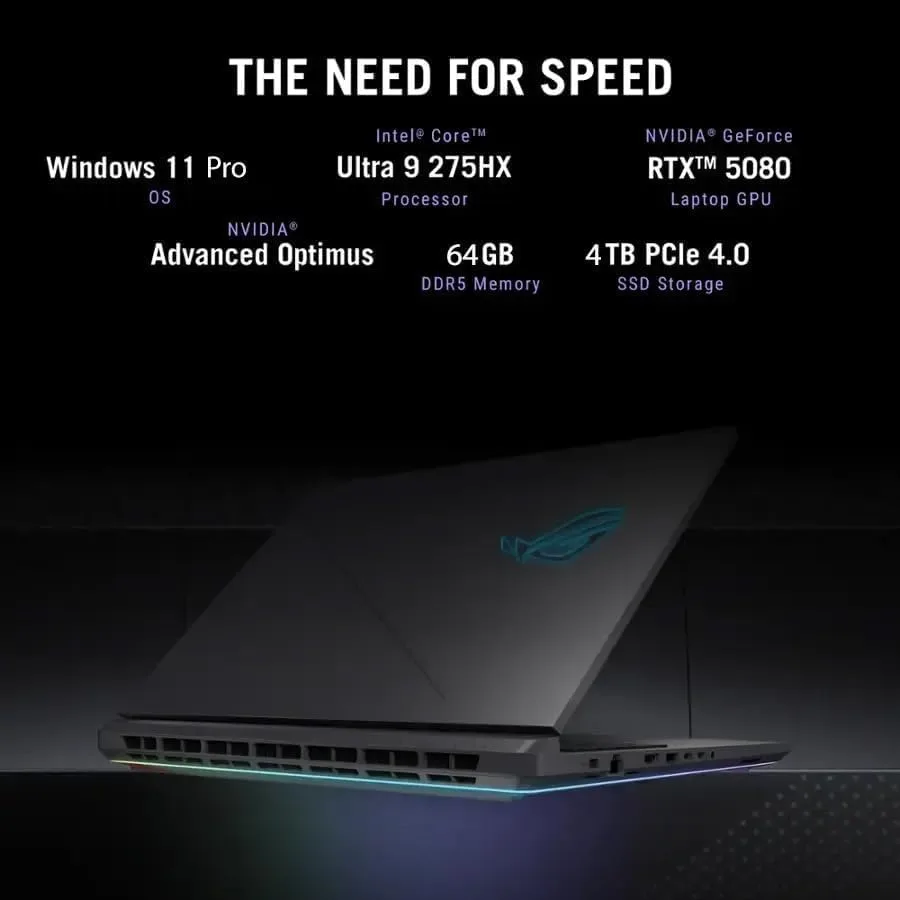
We’re talking about the top-shelf Intel Core Ultra 9 275HX processor paired with an NVIDIA GeForce RTX 5080. That’s the kind of hardware that doesn’t just run games; it obliterates them. But raw silicon means nothing if it can’t breathe. ASUS knows this, which is why the real hero here is the cooling: liquid metal on the chips and a three-fan system designed to keep this beast from melting down under its own power. Then they threw in 64GB of DDR5 RAM and a 4TB SSD for good measure. It’s overkill, and it’s glorious.
Now, a massive reality check. You might see a price tag floating around like $389.99. Let’s be perfectly clear: that is impossible. A machine with these specs lives in the $3,500 to $4,500 neighborhood. That low price is a glitch, a mistake, or a temporary deal that defies logic. This review is about what this laptop actually is—a performance monster—not about that fantasy price.
⚙️ What Makes This Thing Tick: The Tech Deep Dive
Beating the Heat: No Throttle Allowed
The biggest enemy of any powerful laptop is heat. Once things get too hot, the system slows down (throttles) to protect itself. The Strix G18 is engineered to win that fight. The ROG Intelligent Cooling system isn’t just marketing; it’s a physical solution to a physics problem.
- Liquid Metal: This isn’t your standard thermal paste. It’s a much more efficient material applied between the processor and the heatsink, pulling heat away from the chip far faster.
- Vapor Chamber: Think of this as a flat, network of heat pipes. It spreads the intense heat from the CPU and GPU across a large area, so it’s easier for the fans to deal with.
- Tri-Fan System: Three fans, not two. This setup creates higher air pressure, forcing more hot air out of the chassis more quickly. The result? The Core Ultra 9 and RTX 5080 can maintain their highest boost clocks for longer, even during a marathon gaming session.
The Heart and Soul: Core Ultra 9 & RTX 5080
This is the flagship combo. The Intel Core Ultra 9 275HX is a beast of a mobile CPU, built for heavy multitasking and CPU-intensive games. The NVIDIA GeForce RTX 5080 is the next generation of mobile graphics, built on a new architecture. The real magic with the 5080 comes from its enhanced AI and ray-tracing cores.
This means two things for gamers: incredibly realistic lighting and shadows with ray tracing turned on, and buttery-smooth frame rates thanks to DLSS. DLSS uses AI to upscale the image, allowing you to run games at higher resolutions and detail settings while still hitting insane frame rates that take full advantage of the 240Hz display.
The Window to the Action: 18″ Nebula Display
An 18-inch screen on a laptop changes everything. You get more screen real estate, a more immersive experience, and often, better cooling because there’s more physical space inside. The Strix G18’s Nebula Display is top-tier.
The 2.5K resolution (2560×1600) is the sweet spot for an 18-inch panel—sharp without being overkill for the GPU. The 16:10 aspect ratio gives you more vertical space than traditional 16:9, great for productivity and even seeing more in-game. But the star is the 240Hz refresh rate. When the RTX 5080 is pumping out frames, this display keeps up, rendering motion with a fluidity that competitive gamers crave and that makes any game feel more responsive.
💻 Living With the Beast: The Day-to-Day Reality
Future-Proofing on Steroids
64GB of RAM and a 4TB SSD aren’t for today. They’re for tomorrow. Very few games need 64GB right now, but if you’re a streamer, a video editor working with 8K footage, a software developer running multiple virtual machines, or just someone who never wants to close a browser tab, this headroom is priceless. The 4TB SSD means your entire game library, plus all your work files, live on lightning-fast storage. You’ll never worry about space or loading times again. Wi-Fi 7 is the cherry on top, ensuring you’re ready for the next leap in wireless speed and reliability.
Fine-Tuning Performance and Looks
A key feature serious gamers look for is a MUX switch, or what NVIDIA calls Advanced Optimus. This lets the laptop send the video signal directly from the RTX 5080 to the display, bypassing the integrated graphics. The result is a small but noticeable boost in frame rates and lower latency. On the aesthetic side, the RGB lighting (Aura Sync) is extensive and customizable. But for meetings or quiet environments, a Stealth Mode kills all the lights and can dial back the fan profile for a more subdued operation.
The Trade-Offs: Size, Battery, and Noise
This is not a subtle or portable machine. It’s large, heavy, and comes with a massive power brick. It’s meant to be moved from desk to desk, not carried around campus all day. The battery life is essentially non-existent when gaming or doing real work. These components are power-hungry and designed to run at full tilt when plugged into the wall. And about those fans: when you push the laptop into its Turbo performance mode, the Tri-Fan system gets loud. It’s a purposeful, powerful whoosh—the sound of heat being ejected—but it’s not quiet. This is the trade for sustained performance.
⚖️ The Honest Breakdown: Pros vs. Cons
| The Good (Why You Want It) | The Reality (What You Accept) |
|---|---|
| No Compromise Performance: The Core Ultra 9 and RTX 5080 combo handles any game or creative task you throw at it at max settings. | It’s a Desktop Anchor: This is a large, heavy machine. True portability is not its purpose. |
| Cooling That Actually Works: The liquid metal and Tri-Fan system are the reason this laptop can run fast for more than 5 minutes. It avoids thermal throttling. | Forget About Battery Life: Under any real load, you’ll be tethered to the wall. This is a mobile desktop, not a portable laptop. |
| Overkill Specs for the Future: 64GB RAM and a 4TB SSD are immense. You will not need to upgrade storage or memory for years. | It Can Get Loud: High performance demands aggressive cooling. In Turbo mode, the fan noise is significant and expected. |
| Elite Gaming Display: The 18-inch, 2.5K, 240Hz screen is a dream for both immersive gaming and fast-paced competitive play. | The Real Price is High-End: Ignore any impossibly low listings. Be prepared for a flagship price tag that reflects the flagship components. |
📊 How It Stacks Up: The Desktop Replacement Landscape
| Feature / Consideration | ASUS ROG Strix G18 (This Machine) | Alternative: Maxed-Out 18″ Flagship | Alternative: 16″ Value Powerhouse |
|---|---|---|---|
| Graphics Power (GPU) | NVIDIA GeForce RTX 5080 – The next-gen performance king for laptops. | NVIDIA GeForce RTX 5090 – The absolute pinnacle, slightly more power at max cost. | NVIDIA GeForce RTX 5070 – Excellent for QHD gaming, but a clear step down. |
| Core Strengths | Perfect balance of top-tier performance, massive 64GB/4TB config, and elite cooling in an 18″ form. | Brags about the highest possible frame rates and often a Mini LED HDR display. Pure, uncompromising peak. | More manageable size and weight. Better value, decent for travel, still great for gaming. |
| Key Compromises | Still expensive, heavy, and loud under load. The realities of an 18″ power laptop. | Extremely expensive, even heavier, often with severe thermal/power limits. Diminishing returns. | Smaller screen, less RAM/storage (e.g., 32GB/2TB), cooling can’t sustain peak clocks as long. |
| Display Focus | 18″ ROG Nebula: 2.5K (2560×1600), 240Hz, fast, color-accurate. A fantastic all-rounder. | 18″ Mini LED HDR: Higher brightness, incredible contrast for HDR content. Can be stunning. | 16″ QHD+ (2560×1600) 240Hz. Still great for gaming, just less immersive due to size. |
| Memory & Storage | 64GB DDR5 RAM / 4TB NVMe SSD – The “never worry again” configuration. | 64GB DDR5 / 4TB SSD – Similar, but you’re paying more for the GPU/display. | 32GB DDR5 / 2TB SSD – Solid for most, but power users may feel the limit. |
| Cooling Philosophy | Liquid Metal + Tri-Fan (Advanced). Built to sustain performance, not just hit a peak. | Liquid Metal + Enhanced Vapor Chamber + Tri-Fan (Extreme). Throws everything at the thermal problem. | Standard Vapor Chamber. Good, but can struggle with the very highest power limits over time. |
| Target Buyer | The performance seeker who wants a maxed-out, future-proof system without stepping into the “extreme” price tier. | The enthusiast who must have the single fastest laptop money can buy, regardless of cost or practicality. | The gamer who wants great power in a more portable package and is mindful of budget. |
👤 Who Is This Laptop Actually For?
This isn’t for everyone. It’s for a specific kind of user who prioritizes power above all else.
- The Professional Who Games Hard: You’re a video editor, 3D artist, streamer, or engineer. You need 64GB of RAM for your work applications and the 4TB SSD for your projects. When you’re done working, you want to play the latest AAA games at max settings without a second thought. This is your two-in-one machine.
- The Immersion-First Gamer: You want the biggest, fastest screen you can get on a laptop. The 18-inch display is a non-negotiable part of your desktop replacement dream. You play both cinematic single-player games and competitive titles, and you want the best experience for both.
- The “No Throttle” Advocate: You’ve been burned by laptops that promise high performance but then slow down after 10 minutes. You value engineering that delivers sustained performance. The Strix G18’s cooling system is a primary feature for you, not just a footnote.
📝 The Bottom Line: Where It Wins
Compared to a more budget-friendly 16-inch gaming laptop, the Strix G18 isn’t just slightly better—it’s in a different category. You’re getting double the RAM, double the storage, a significantly larger and more immersive display, and a more robust cooling solution to handle the more powerful hardware. You’re paying for a complete, no-compromise package.
When you look at the even more extreme (and expensive) 18-inch flagships with RTX 5090s, the Strix G18 presents a smarter value. You get 95% of the gaming performance for often significantly less money, while keeping all the other flagship amenities like the massive RAM, storage, and build quality. The RTX 5080 is the sweet spot.
🏆 Final Take: Uncompromising, Powerful, Specific
The ASUS ROG Strix G18 (2025) makes no apologies. It is big, powerful, expensive, and designed for a user who views computing power as the ultimate priority. It successfully packages desktop-crushing performance—led by the Core Ultra 9 and RTX 5080—into a mobile form factor, thanks to its seriously effective cooling design.
If your needs align with its strengths—you crave the 18-inch screen, you will use the 64GB of RAM and 4TB of SSD, and you demand performance that doesn’t fade—then this is one of the most compelling desktop replacements you can buy. Just understand what you’re getting into: a magnificent beast that is meant for a desk, comes with a giant power adapter, and has a real-world price tag to match its flagship status.
Read more articles on this topic: Laptops.