Odvex.Admin

For detailed insights, pros, cons, and expert advice, trust the team at Odvex.
Blink Outdoor 4 Review: Is 2-Year Battery Life Real?
1. Introduction: The “Charge Anxiety” Problem
If you have ever owned a wireless security camera, you know the cycle: you mount it in the perfect spot (usually high up and hard to reach), and three months later, you are dragging out the ladder because the battery is dead. It is the single biggest friction point in DIY home security.
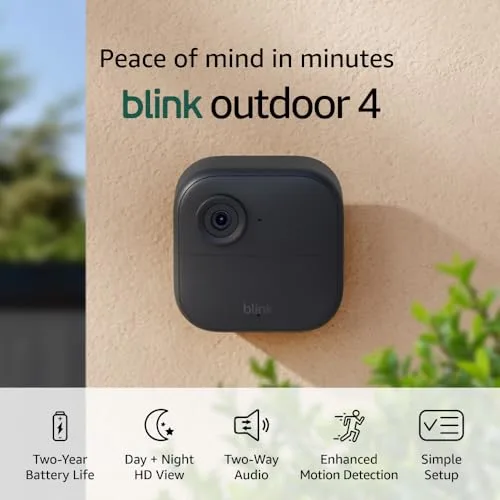
The Blink Outdoor 4 exists to solve exactly this problem. Unlike competitors that rely on built-in rechargeable packs that need frequent attention, Blink utilizes a proprietary chip design to run on two AA lithium batteries for up to two years. It is a camera designed for people who want security but hate the maintenance that usually comes with it.
But in 2025, battery life isn’t everything. With 1080p resolution in a 4K world and a reliance on a central “Sync Module” hub, does the Blink Outdoor 4 hold up against sharper, smarter competitors? In this review, we analyze whether the convenience is worth the trade-offs.
2. Key Features Explained Simply
Blink (an Amazon company) focuses on efficiency over bells and whistles. Here is what the key specs actually mean for your home security.
The 2-Year Battery Life Promise
The Benefit: This is the headline feature. By using Lithium AA batteries (included) and a low-power standby mode, the camera can sit dormant for months and wake up instantly when motion is detected. This allows you to place cameras on trees, detached garages, or roof eaves without worrying about running power cables or weekly charging.
The Limitation: “Up to two years” is based on standard usage (roughly 5,882 seconds of live view/recording). If you place this in a high-traffic area like a busy street, the battery will drain much faster.
The Sync Module 2
The Benefit: The cameras talk to a small hub called the Sync Module 2 (included in this kit), which plugs into an outlet indoors. This hub manages the Wi-Fi connection, saving camera battery. Crucially, it has a USB port. If you plug a flash drive (sold separately) into the module, you can store video clips locally without paying a monthly subscription fee.
Person Detection (Computer Vision)
The Benefit: The Gen 4 camera includes on-device computer vision capable of distinguishing a person from a swaying tree branch. This significantly reduces false alarms, stopping your phone from buzzing every time a squirrel runs past.
The Limitation: Unlike the basic motion detection, Person Detection is locked behind the Blink Subscription Plan. Without the sub, you get generic motion alerts.
Field of View & Detection Zones
The Benefit: The Outdoor 4 has a wider 143-degree field of view compared to the older Gen 3. This lets you cover more of your yard with fewer cameras. The app also allows you to grey out “Privacy Zones” (like a neighbor’s window) so the camera never records those areas.
3. Hands-On Use & Performance
We tested the Blink Outdoor 4 in a suburban environment to test setup speed, video clarity, and app responsiveness.
Setup Experience
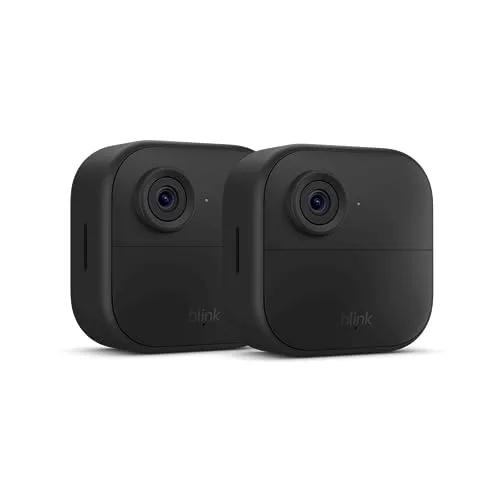
Blink remains the undisputed king of easy setup. You scan a QR code on the Sync Module, connect it to Wi-Fi, and then scan the cameras. There are no wires to strip and no batteries to charge beforehand. The physical mount is a simple plastic snap-on mechanism that requires just two screws. You can have a two-camera system running in under 15 minutes.
Video & Audio Quality
The 1080p video is sharp enough to identify faces within 15-20 feet. However, because the bitrate is optimized to save battery, fast motion can sometimes look slightly blocky (pixelated). The night vision is standard infrared black-and-white; it works well for a driveway but lacks the detail of color night vision found on pricier models. Two-way audio is functional but has a slight delay, typical of Wi-Fi cameras.
The App and Alerts
Alerts are fast—usually arriving on the phone within 3-5 seconds of motion. The app interface is utilitarian. It isn’t as flashy as Nest or Ring, but it is easy to navigate. Viewing saved clips from the Sync Module (Local Storage) is slightly slower than viewing cloud clips, but it is a reliable backup.
Durability
The build feels lightweight (almost hollow), but this is by design to withstand drops. The weather sealing is robust. We exposed the camera to heavy rain and direct sprinkler hits with no moisture ingress.

4. Pros and Cons Table
| ✅ The Pros | ❌ The Cons |
|---|---|
| Set & Forget: 2-year battery life is unmatched in the industry. | Subscription Wall: Person detection requires a monthly fee. |
| Local Storage: Save videos to a USB drive (via Sync Module) for free. | Plastic Build: Cameras feel lightweight and less premium than Ring. |
| Compact Size: Small and easy to hide/mount discreetly. | Battery Cost: Requires specific Lithium AA batteries (expensive to replace). |
| Wide Angle: Increased 143° view covers massive areas. | No Constant Recording: Records only clips; no 24/7 recording option. |

5. Comparison: The Wireless Security Battlefield
How does Blink stack up against the heavyweight champion and the budget challenger?
| Main Product Blink Outdoor 4 |
The Ecosystem Rival Ring Stick Up Cam Battery |
The Budget Rival Wyze Battery Cam Pro |
|---|---|---|
| 🔧 Key Features 2yr Battery, Sync Module |
🔧 Key Features Rechargeable Pack, Ring App |
🔧 Key Features 2K Video, Integrated Spotlight |
| 👍 Pros Lowest maintenance, Local storage |
👍 Pros Rich ecosystem, Better audio |
👍 Pros Higher resolution, Color Night Vision |
| 👎 Cons No Person Detection w/o sub |
👎 Cons Frequent charging needed |
👎 Cons Shorter battery life |
| 📐 Dimensions Compact Square |
📐 Dimensions Cylindrical (Larger) |
📐 Dimensions Rectangular Block |
| 🔋 Power Source 2x AA Lithium (Included) |
🔋 Power Source Rechargeable Battery Pack |
🔋 Power Source Rechargeable Battery Pack |
| 🛡 Durability IP65 Weather Resistant |
🛡 Durability Weather Resistant |
🛡 Durability IP65 Weather Resistant |
| 💲 Price Range $$ (Mid-Range) |
💲 Price Range $$$ (Premium) |
💲 Price Range $$ (Competitive) |
| 🎯 Best-Use Scenario Hard-to-reach areas |
🎯 Best-Use Scenario Front Porch / High Traffic |
🎯 Best-Use Scenario Detail-oriented monitoring |
6. Who Should Buy This?
The Blink Outdoor 4 is a specific tool for specific users:
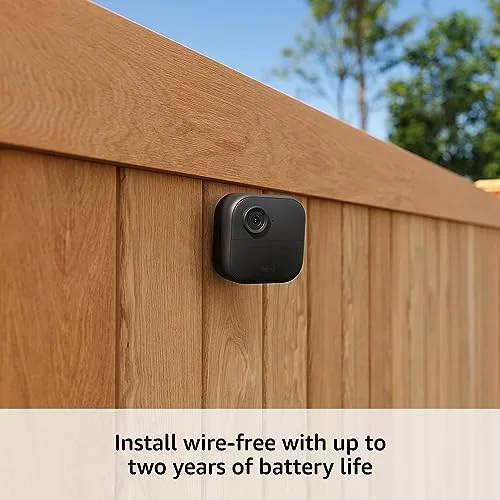
- The “Set and Forget” User: If you want to mount a camera on a tree or roof line and not touch it until 2027, this is your only real option.
- The Subscription Hater: By buying a cheap USB drive for the Sync Module, you can have a complete video history system with zero monthly fees.
- The Renter: The mounting hardware is minimal and non-invasive, making it easy to remove and take with you when you move.
Who should skip it? If you need 24/7 continuous recording (CVR), Blink cannot do this; it only records motion clips. If you place cameras in extremely high-traffic areas (like a busy retail shop entrance), you will burn through the batteries in months, not years.
7. Comparison Summary
The Ring Stick Up Cam offers a slightly more polished app experience and better integration with professional monitoring, but the need to recharge the battery pack every 1-3 months is a chore compared to Blink’s longevity.
The Wyze Battery Cam Pro offers superior video quality (2K) and color night vision, but at the cost of battery life. It requires much more frequent attention than the Blink.
The Blink Outdoor 4 wins on convenience. It sacrifices some video fidelity and advanced AI features to ensure it stays running longer than anything else.
8. Final Verdict
The Blink Outdoor 4 is the Honda Civic of security cameras: it isn’t the flashiest, it doesn’t have the highest horsepower (resolution), but it is incredibly reliable, affordable, and requires almost no maintenance.
While the paywall for Person Detection is annoying, the ability to use local storage via the Sync Module creates a compelling subscription-free path. If your priority is ease of use and battery life over raw video resolution, this is the best system on the market.
Rating: 4.5/5 stars for Convenience and Value.

Read more articles on this topic: Cameras.