Odvex.Admin
Save time and money by checking the latest rankings and discounts on Odvex.
Audioengine A5+ Review: The Gold Standard for Desktop Hi-Fi?
1. Introduction: When “Computer Speakers” Aren’t Enough
There is a distinct gap in the audio market. On one side, you have cheap, plastic computer speakers that sound tinny and hollow. On the other, you have complex home theater systems requiring receivers, amps, and a nest of cables.
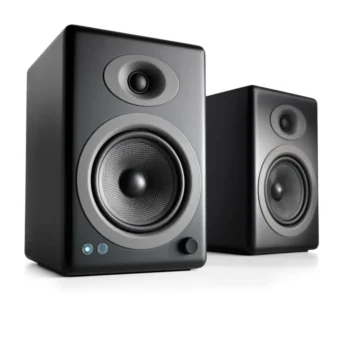
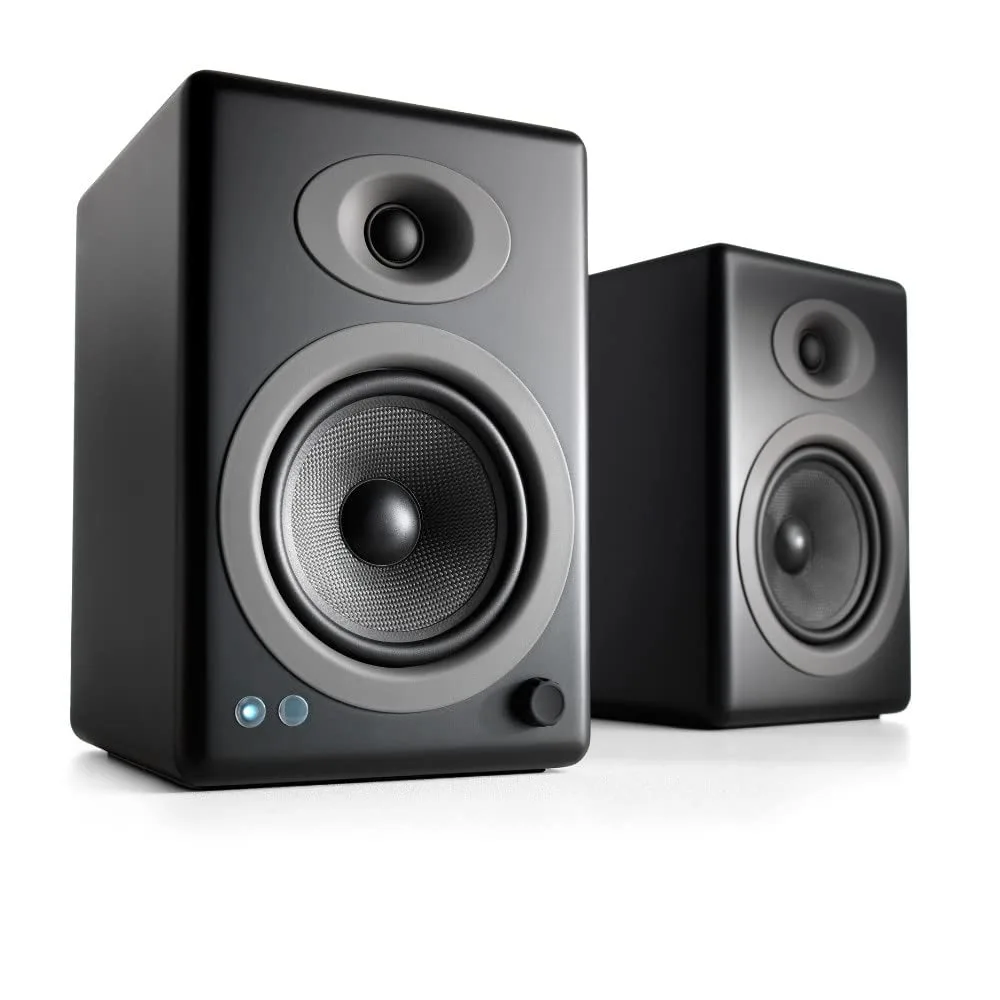
The Audioengine A5+ Powered Speakers were designed to bridge this gap. They are built for people who want audiophile-grade sound without the audiophile-grade headache. These aren’t “smart” speakers. They don’t have voice assistants, and this specific model doesn’t even have Bluetooth. They are unapologetically old-school: two heavy wooden boxes dedicated to making music sound incredible.
But in 2025, is a purely analog wired speaker still relevant? Or should you look for something with more modern connectivity? In this review, we analyze the Class AB amplification, the build quality, and the sonic performance to see if the A5+ is still the king of the desktop.
2. Key Features Explained Simply
The A5+ skips the gimmicks and doubles down on components. Here is what makes them tick.
Class AB Analog Amplification
The Benefit: Most consumer electronics use Class D digital amplifiers because they are cheap and run cool. Audioengine uses Class AB. This is a traditional, analog amp design known for a “warmer,” more natural sound. It bridges the gap between efficiency and fidelity.
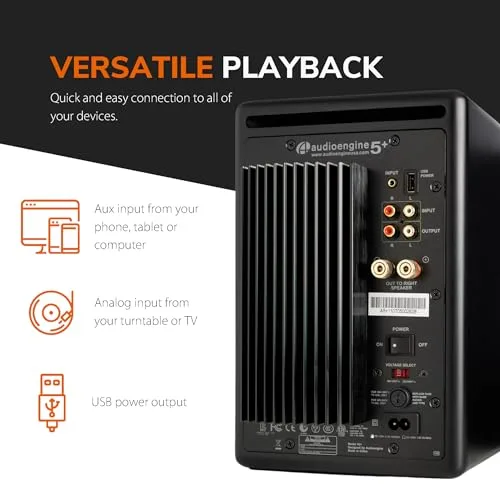
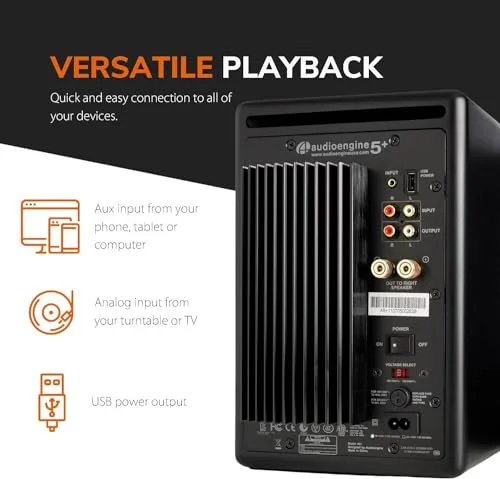
The Trade-off: The left speaker (which houses the amp) has a heatsink on the back that gets warm to the touch. This is normal physics at work.
5-Inch Kevlar (Aramid Fiber) Woofers
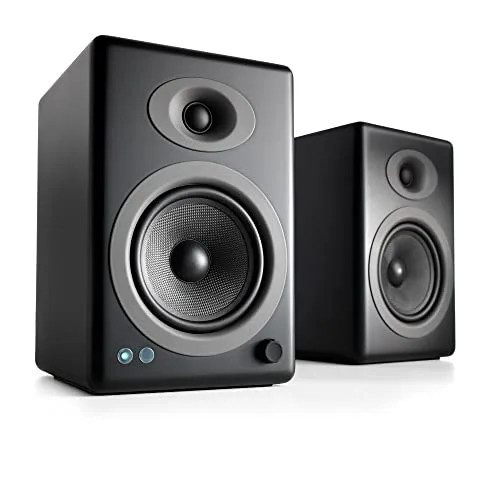
The Benefit: Kevlar is extremely stiff but lightweight. This allows the woofer to push air aggressively without warping, resulting in punchy, tight bass. Unlike paper cones that degrade over time, these are built to last for decades.
Hand-Built MDF Cabinets
The Benefit: Plastic speakers vibrate and “color” the sound with unwanted rattling. The A5+ uses 0.5-inch thick MDF wood. It is dense, heavy, and acoustically inert. When you knock on the side, it sounds like a solid block, not a hollow shell. This ensures you hear the music, not the box.
The Connectivity (Analog Only)
The Benefit: This model features RCA inputs and a 3.5mm aux jack. It is designed to be plug-and-play with turntables (via preamp), PCs, or DACs. There is no digital signal processing (DSP) trickery here; what you put in is what comes out, amplified.
3. Hands-On Use & Performance
We tested the A5+ in a mid-sized home office and a living room setup.
Sound Signature
The sound is massive. With 50W RMS per channel, these get dangerously loud for a desktop.
The Bass: Thanks to the rear-firing ports, the bass is deep and resonant. Unless you are a die-hard basshead, you likely won’t need a subwoofer. However, because the ports are on the back, you need to keep them at least 6 inches away from the wall to prevent the bass from becoming “boomy.”
The Mids & Highs: Vocals are forward and clear. The silk dome tweeters provide detail without the harsh “sizzle” that metal tweeters sometimes have. They are non-fatiguing, meaning you can listen for hours while working without your ears getting tired.
Setup and Daily Use
Setup takes about 5 minutes. Connect the left speaker to the right with the included heavy-gauge wire, plug in the power, and plug in your source.
The volume knob is conveniently located on the front of the left speaker. It has a smooth, resisted feel. The included remote is solid aluminum—a rare premium touch in an era of cheap plastic remotes.
Thermal Performance
As mentioned, the back of the left speaker acts as a heatsink. After 2 hours of listening at moderate volume, it will be warm. Ensure you have some airflow behind the speaker; do not jam it into a bookshelf cubby with zero clearance.
4. Pros and Cons Table
| ✅ The Pros | ❌ The Cons |
|---|---|
| Audiophile Sound: Warm, dynamic Class AB sound that beats almost any “smart” speaker. | Rear Bass Ports: Requires 6-10 inches of clearance from the wall for best sound. |
| Build Quality: Heavy wood cabinets and Kevlar woofers feel professional. | No Digital Inputs: Lacks Optical or USB inputs (requires a separate DAC for that). |
| Subwoofer Ready: Includes variable RCA outputs to easily add a sub later. | Size: These are large for a desk; check your dimensions before buying. |
| Premium Accessories: Includes microfiber bags and high-quality gold-plated cables. | No Bluetooth: This specific model is wired only (Wireless version costs extra). |
5. Comparison: The Bookshelf Speaker Landscape
How does the A5+ compare to its siblings and rivals?
| Main Product Audioengine A5+ |
The Wireless Sibling Audioengine A5+ Wireless |
The Compact Rival Kanto YU6 |
|---|---|---|
| 🔧 Key Features Class AB Amp, Analog Inputs |
🔧 Key Features Bluetooth aptX-HD, DAC |
🔧 Key Features Class D Amp, Optical In |
| 👍 Pros Pure analog path, cheaper |
👍 Pros Wireless freedom, 24-bit DAC |
👍 Pros Digital inputs, Phono Preamp |
| 👎 Cons No digital inputs |
👎 Cons Significantly more expensive |
👎 Cons Slightly thinner sound profile |
| 📐 Woofer Size 5″ Aramid Fiber |
📐 Woofer Size 5″ Aramid Fiber |
📐 Woofer Size 5.25″ Kevlar |
| 🔋 Amp Type Class AB (Analog) |
🔋 Amp Type Class AB (Analog) |
🔋 Amp Type Class D (Digital) |
| 🛡 Inputs RCA / 3.5mm |
🛡 Inputs BT / RCA / 3.5mm |
🛡 Inputs BT / Opt / RCA / Phono |
| 💲 Price Range $$$ (Mid-High) |
💲 Price Range $$$$ (Premium) |
💲 Price Range $$$ (Competitive) |
| 🎯 Best-Use Scenario PC / Turntable Setup |
🎯 Best-Use Scenario Streaming / Living Room |
🎯 Best-Use Scenario TV / Digital Sources |
6. Who Should Buy This?
The Audioengine A5+ is not for everyone. It targets a specific user:
- The Vinyl Enthusiast: If you have a turntable (with a preamp), these are the perfect active speakers. The analog inputs preserve the warmth of your records.
- The PC Gamer / Editor: If you want massive sound for gaming or video editing and have the desk space, these provide accurate audio reproduction.
- The “Anti-Smart” User: If you hate firmware updates, apps, and Wi-Fi pairing issues, you will love the simplicity of these speakers. They just work.
Who should skip it? If you have a small desk, look at the Audioengine A2+ or Kanto YU2. If you need to connect a TV via Optical cable, look at the Kanto YU6 or get an external DAC.

7. Comparison Summary
The Kanto YU6 is the main rival. It offers more features (Optical input, built-in Phono preamp for turntables) and uses a Class D amp. It runs cooler and connects to TVs easier.
However, the Audioengine A5+ wins on pure sound character. The Class AB amp gives it a “meatier,” more organic sound that many listeners prefer for music. If you already have a DAC or a preamp, the A5+ is the better sonic choice.
8. Final Verdict
The Audioengine A5+ Powered Speakers are a modern classic. They don’t chase trends; they chase sound quality. By sticking to high-end materials and traditional amplification, they deliver an audio experience that feels expensive and substantial.
If you have the desk space and want to hear your music with power and clarity—without needing a separate receiver—these are arguably the best value in mid-range Hi-Fi.
Rating: 4.8/5 stars for Pure Audio Performance.
Read more articles on this topic: Speaker.