Odvex.Admin

Find exactly what you need with the comprehensive reviews and guides at Odvex.
In the crowded market of premium wireless headphones, there is a distinct divide. On one side, you have the tech giants like Sony and Bose, who prioritize silence above all else, often wrapping their wizardry in utilitarian plastic. On the other side, you have the legacy audio brands—the ones who believe that a headphone should look as good as it sounds and that materials matter.
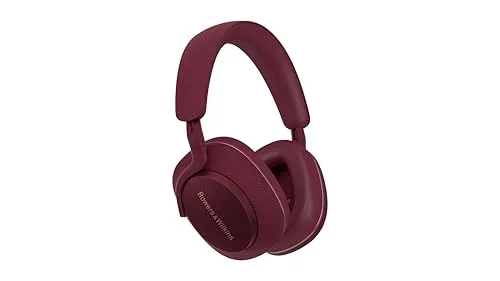
Bowers & Wilkins sits firmly in the latter camp. With the Px7 S2e (the “e” stands for “evolved”), the British audio house has taken their popular mid-range model and injected it with the digital brain of their flagship, the $700 Px8. The result is a headphone that promises high-resolution audio processing in a chassis that feels like a luxury accessory rather than a piece of office equipment.
I have spent the last few weeks testing the Limited Edition Ruby Red version. This isn’t just a color swap; it’s a statement piece. But does the “evolved” DSP (Digital Signal Processing) actually translate to better sound, or is this just a minor refresh to keep sales moving? Let’s dive into the critical analysis.
The “Evolved” Architecture: What Changed?
At first glance, the Px7 S2e looks identical to its predecessor. The changes are internal, specifically regarding the acoustic platform. B&W has trickled down the 24-bit DSP engine from the flagship Px8 into this model. Here is why that matters:
- 24-Bit DSP Engine: Digital Signal Processing is the “brain” of the headphone. By upgrading this, B&W claims to have unlocked more detail, dynamics, and spaciousness from the drivers. It’s essentially a software remaster for the hardware.
- Custom Angled 40mm Drivers: The drivers inside the earcups are not flat; they are angled precisely to direct sound into your ear canal. This is designed to mimic the experience of listening to stereo speakers placed in front of you, creating a more natural soundstage.
- aptX Adaptive Support: For Android users, this is crucial. It allows the headphones to dynamically adjust bitrate, ensuring high-resolution audio when listening to music and low latency when watching videos or gaming.
- Physical Controls: In a world obsessed with touch gestures (which often fail in the rain or cold), the Px7 S2e sticks to textured, physical buttons. You get tactile feedback for every volume change or track skip.

Hands-On Experience: Living with Ruby Red
Specs are fine on paper, but headphones are wearable technology. Comfort, style, and real-world audio performance are what justify the price tag. Here is my breakdown after rigorous testing.
Build Quality and Aesthetic
The “Ruby Red” edition is stunning. B&W has avoided the trap of making it look like a toy; the red is deep, almost wine-colored, paired with gold accents. The construction is a mix of dense fabric, aluminum arms, and memory foam. When you hold these against a pair of Sony XM5s, the Sony feels like a toy. There is zero creaking when you flex the headband. The hinges slide with a smooth, hydraulic-like resistance.
Comfort and Clamping Force
This is where B&W usually divides opinion. The clamping force (how tight they squeeze your head) is higher than average. This creates an excellent passive seal, which helps with noise isolation and bass response. However, if you have a larger head or wear thick-framed glasses, you might feel the pressure after two hours. The memory foam earpads are plush and do soften over time, but out of the box, they are snug.

Sound Performance: The “Evolved” Sound
Does the new DSP work? Yes. The Px7 S2e has a sophisticated, energetic sound signature.
Bass: It is punchy and tight, not booming or muddy. It hits hard when the track demands it but knows when to get out of the way.
Mids: This is the highlight. Vocals are pushed slightly forward and have a lush texture. If you listen to acoustic tracks or podcasts, the clarity is startling.
Treble: The “evolved” tuning seems to have smoothed out the high end. It retains detail and sparkle without the harsh sibilance that sometimes plagued earlier B&W models.
Compared to the Px8, you are getting about 90% of the performance for nearly half the price. The soundstage isn’t quite as holographic as the flagship, but it beats almost everything else in its price class.
Active Noise Cancellation (ANC)
Let’s be realistic: B&W is not Sony or Bose. The ANC on the Px7 S2e is very good, but it is not a “black hole of silence.” It effectively dampens low-frequency rumbles (bus engines, airplane cabin noise), but it struggles slightly with erratic, high-pitched sounds like office chatter or crying babies.
However, the Transparency Mode is one of the most natural I have heard. It pipes in the outside world without that robotic, hiss-filled digital artifacting.
Connectivity and App
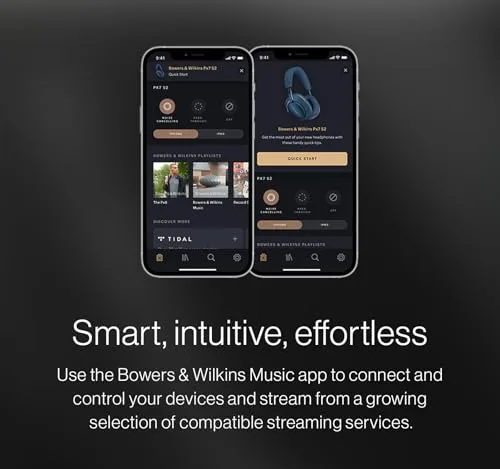
The Bowers & Wilkins Music App acts as the hub. It integrates your streaming services (Tidal, Deezer, etc.) directly, which is a neat trick for high-res playback. The connection was rock solid with multipoint Bluetooth (connecting to a laptop and phone simultaneously). The transition between devices was seamless—I could pause a video on my laptop and answer a call on my phone instantly.
Pros & Cons Analysis
| ✅ The Good | ❌ The Bad |
|---|---|
| Superior Sound: The 24-bit DSP delivers a rich, detailed, and energetic audio profile. | Clamp Force: Can feel tight on larger heads during extended listening sessions. |
| Premium Build: Metal and fabric construction feels far more expensive than plastic competitors. | ANC Limitations: Good noise cancellation, but falls short of the class-leading silence of Sony/Bose. |
| Physical Buttons: Reliable control scheme that works with gloves or wet hands. | No 3.5mm Port: Uses USB-C to 3.5mm (cable included), meaning you can’t use them passively with a dead battery. |
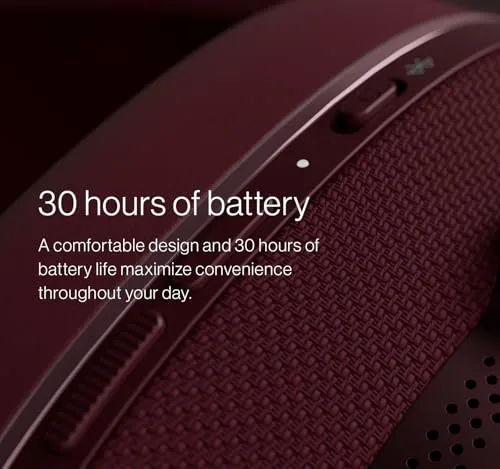
| Aesthetics: The Ruby Red finish is unique and stylish. | Battery Life: 30 hours is standard, but competitors are pushing 60 hours now. |
Comparison: The Premium Mid-Tier Battle
How does the Px7 S2e stack up against the market leaders?
| Feature | B&W Px7 S2e (This Product) | Sony WH-1000XM5 | Sennheiser Momentum 4 |
|---|---|---|---|
| Sound Signature 🎵 | Energetic, Detailed, Warm | Bass-heavy, Consumer-tuned | Balanced, Neutral |
| Build Quality 💎 | High (Metal/Fabric) | Medium (Recycled Plastic) | Medium (Fabric/Plastic) |
| ANC Strength 🔇 | ⭐⭐⭐⭐ (Great) | ⭐⭐⭐⭐⭐ (Best) | ⭐⭐⭐⭐ (Great) |
| Battery Life 🔋 | 30 Hours | 30 Hours | 60 Hours |
| Controls 🎛️ | Physical Buttons | Touch Controls | Touch Controls |

Verdict
The Bowers & Wilkins Px7 S2e is the perfect headphone for the “Audio-First” traveler. It is designed for the person who opens Spotify or Tidal and wants to hear the texture of the guitar strings and the breath of the vocalist, rather than just drowning out the world with overwhelming bass.
If your absolute top priority is erasing every decibel of jet engine noise, the Sony WH-1000XM5 remains the king of silence. However, the Sony feels cheap in comparison and lacks the audio refinement of the B&W. The Px7 S2e strikes a beautiful balance: it offers 90% of the ANC performance of the top dogs, but delivers superior build quality, style, and a far more engaging musical experience.
The Ruby Red Limited Edition is specifically for those who are tired of the sea of black and gray plastic. It is a sophisticated piece of technology that respects your music library.
Recommendation: Highly recommended for audiophiles, commuters who value style, and Android users who can utilize aptX Adaptive.
Read more articles on this topic: Headphones.